
Nine Options Above a Sofa, With a Reason to Choose Each
1. One framed artwork, photograph or canvas
Choose this when one image is what you want to see from the room and you prefer one contained arrangement. A smaller work with deliberate space around it can be a choice too; bigger is not automatically better.
Check before choosing: Measure the outer frame, not just the printed image. Check reflections, weight and the specified fixing. One placement is simpler to plan than several, but a large object is not automatically quick or safe to install.
2. A gallery of photographs and art
Choose this when several pictures matter to you or you want to change the display over time. Matching frames can connect different images; mixed frames can work around a repeated color or outer alignment.
Check before choosing: Lay out the complete group before hanging. Include every frame and gap, and check whether the last row is comfortable above the sofa. There is no requirement to use different frame sizes or to avoid a gallery in a minimalist room.
3. A personalized city or place print
Choose this when a hometown, shared trip or another location is the point of the artwork. Decide whether the street pattern, a photograph or the written place name makes that connection most clearly.
Check before choosing: Inspect the actual preview, coverage, text and finished frame size. Personalization does not make a design exclusive or guarantee that it suits the room. Our Mapiful buyer guide covers ordering questions; we have not tested a Mapiful print ourselves.
4. A mirror
Choose this for the reflection you actually want, not a promise to double the room's light. Check the view from the doorway and the seats: a window, a light fitting and a crowded shelf make very different reflections.
Check before choosing: Confirm the mirror's weight, backing and approved mounting system for this wall. A no-drill product is not a universal fix for a heavy mirror. Do not leave a large mirror leaning unsecured behind the seats.
5. Three prints in a row
Choose this when a repeated rhythm suits the wall and you have three images you want together. Identical frames are one way to make the line orderly, not a requirement for every arrangement.
Check before choosing: Add the three outer widths and both gaps. Try the full outline before choosing paper sizes. A row is one composition to measure, not three small pictures whose individual widths must each match the sofa.
6. A shelf or picture ledge
Consider this when changing small pictures or objects is important enough to justify a shelf. It is a projecting, load-bearing object, not just an alternative shape of wall art.
Check before choosing: Assess head clearance, wall construction, the shelf's specified load and object restraint. Avoid loose, heavy or breakable objects above occupied seating. We would leave a lit candle out of this layout; choose a different display location or a flameless alternative instead. A separate shelf away from the seating may be more useful.
7. A textile or sculptural object
Consider a textile, a shaped panel or another object when its surface or outline is what you want rather than a framed rectangle. It does not have to match every object elsewhere in the room.
Check before choosing: Include any rod, frame or bracket in the total weight and projection. Decorative softness is not evidence of measured acoustic performance. Check the actual materials, care and specified fixing, particularly above occupied seating.
8. Paint, wallpaper or a feature-wall treatment
Consider the whole wall as the color or pattern rather than a space that must also hold purchased artwork. One treated wall can be enough; the other walls do not have to be white.
Check before choosing: Compare preparation, room suitability, permission and restoration before choosing a coating or adhesive. A removable label does not establish that it suits an unknown finish. Use the accent-wall guide for a treatment comparison rather than treating a paint or wallpaper photograph as a product test.
9. An empty wall
Choose this when the room already has enough to look at, you prefer the unfilled space or you have not found an object you want. A white wall and an ordinary sofa do not disqualify the choice.
Check before choosing: Look at the whole room from the usual seats and doorway. You can rearrange lighting, cushions or existing objects without buying wall art. There is no minimum amount of decor that makes the room finished.
For the multi-frame route, use the gallery layout guide. For a personalized print, use the Mapiful buyer guide. For a wall treatment, compare the accent-wall options and restoration checks. None of these choices requires replacing art you already like.
Our Actual Wall: One XL Map, Many Separate Pieces
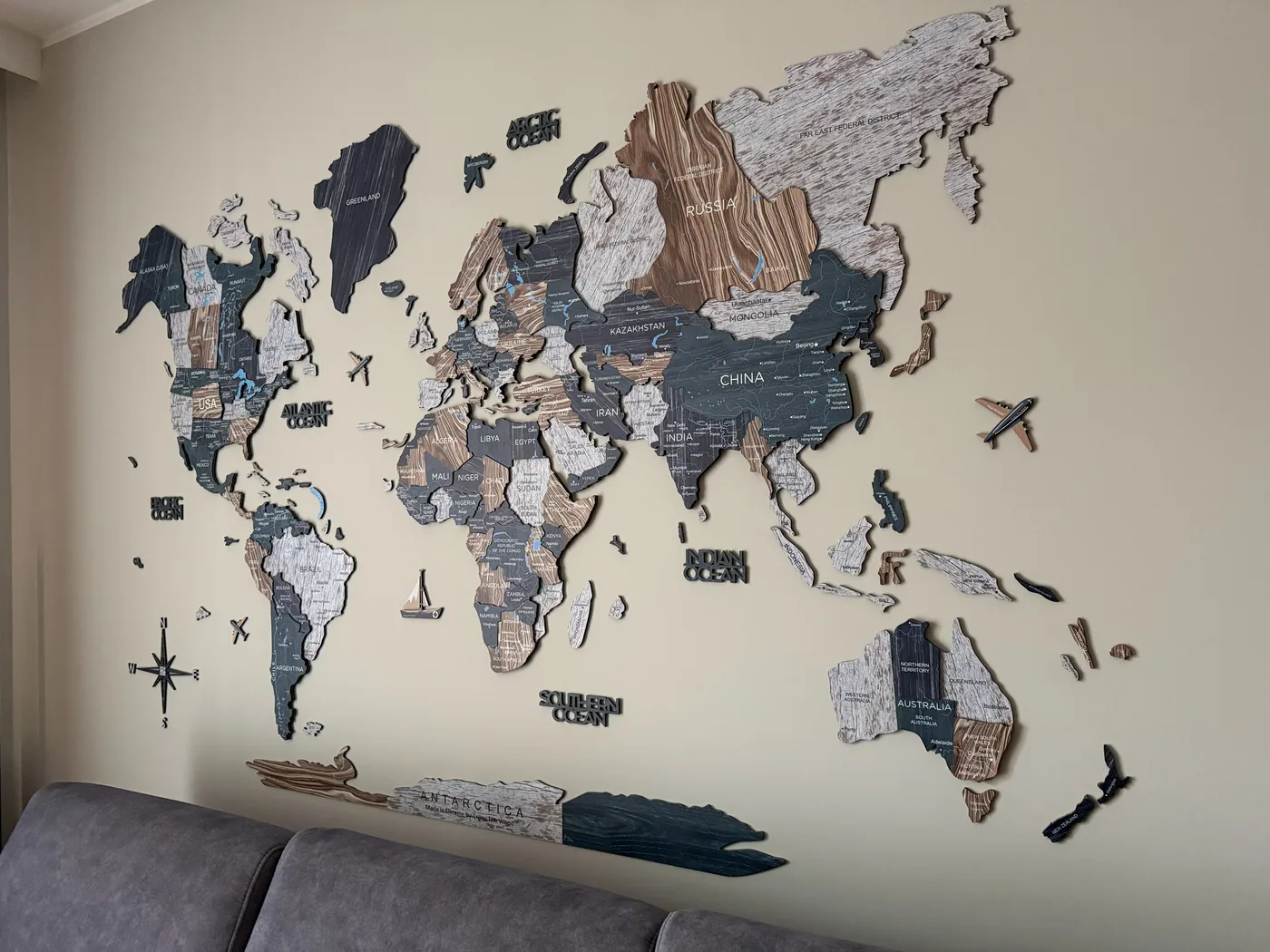
We like the detailed, layered composition and the wall visible between its pieces. It occupies the wall differently from a solid rectangular canvas. Include the outer labels, islands and decorative pieces in the plan rather than measuring only the continents.
Our installation took 4-5 hours. Most of it was straightforward; finding the positions of the small islands took the most time. Everything needed for our installation was in the package. That is one kit and one installation, not a universal contents list or a promise of a quick gift to hang.
We have not tested removing the map or a dedicated picture-light arrangement on it. Do not assume that tape mounting will leave every wall unchanged, that every collection is birch plywood or that the finish improves with age. Inspect the owner review and close-ups and the XL installation notes before committing to this format.
For glare and display-lighting questions, use the living room lighting guide. Check the existing daytime and evening view before buying a picture light; our map photograph does not establish a lighting improvement.
If the whole-world display suits the room, compare actual ETW dimensions rather than buying XL because ours is XL. The discount page documents a separate dated cart; it is not a price quote for our wall or a reason to choose a map over another format.
Test the Outline Instead of Enforcing a Ratio
A width around two-thirds to three-quarters of the sofa can be one starting sketch. It is not a compulsory minimum or a safety standard. Small art, a wider map and an asymmetric group can all be deliberate. The sofa artwork measuring guide has worked width and frame-gap calculations, rather than another table of supposed ideal sizes here.
- Mark the usable wall left by windows, switches, lights and the furniture.
- Compare the complete artwork or group outline, including frames and gaps. Use a temporary method suitable for the finish.
- Check the seated view and doorway view. Include cushions, people leaning back and the depth of any projecting object.
- Try more than one height; do not force a fixed gap or artwork-center height if it conflicts with this furniture.
- Check reflections with the actual daytime and evening lighting before buying a mirror or glazed frame.
For a quieter composition, try repeated frame details or more open space. For a mixed collection, repeat a color or an outer alignment. These are styling options, not bans on galleries in Japandi rooms, warm art over a gray sofa or plain walls above ordinary furniture. Use the TV, reading-corner and small-wall plans below when the wall is elsewhere in the room.
Mounting and Rental Permission Come Before the Purchase
Check the object, actual wall and fixing instructions together. Adhesive strips, hooks and anchors are not interchangeable. A shelf, glass mirror and paper print have different loads and consequences if they fall. For a heavy or uncertain installation over seating, ask a qualified installer rather than inferring safety from a styling gap.
For example, Command's picture-strip instructions have surface and use restrictions. Its FAQ notes that paint can come off and that adding strips does not automatically increase capacity. Follow the exact package requirements; this is not an endorsement of a particular strip or approval for your mirror.
In a rental, confirm permission and restoration expectations before drilling or applying adhesive. Existing approved fixings or leaving the wall empty may be the better fit. No method here guarantees a returned deposit or damage-free removal.
Do not make an open flame part of a shelf arrangement over the sofa. The U.S. Fire Administration's candle guidance discusses combustible surroundings and flameless alternatives. A decorative shelf is not a tested candle location.
Three Walls Beyond the Sofa
You do not have to repeat the main display on every wall. Look from the entrance and the normal seats, then decide what a second arrangement would add. These are planning examples, not three room makeovers we performed.
- A TV wall: start with the screen and equipment
- Check the view when the screen is both on and off. If the screen already supplies the main rectangle, compare leaving the surrounding wall open with one small group or a surface-color change. Keep equipment controls, ventilation and service access clear according to its instructions. Do not add shelves or extra frames only to make the wall match the sofa wall.
- A reading corner: relate the display to the chair
- View a small picture from the actual chair and check the lamp, head movement and route past it. A usable shelf needs its own access, load and fixing plan; it is not merely art with extra storage. Compare a picture with a shelf away from occupied seating if you want to rotate objects. The shelf planning guide covers spacing and use.
- A short wall beside a doorway: protect the route
- Check the door swing, switches and projecting frame edges before selecting an image. One existing photograph, textile or no object may be enough. Use the complete finished dimensions, not the paper size, and do not repeat a large map merely because it works on another wall.
Connect separate displays with one optional relationship: a frame finish, color, alignment or subject. A souvenir does not need replacing because it is inexpensive. For a personal travel story rather than a second generic map, compare the three travel-wall layouts. For wood construction and finishes, use the materials guide.
Check the Complete Project Before Buying
- Measure the usable wall and the furniture it relates to.
- Record complete dimensions, weight, accessories, frame or bracket and what is included.
- Establish the permitted wall/fixing method and any preparation, installation or later restoration work.
- Compare the full artwork, framing, delivery, applicable taxes, tools and installation cost without counting included charges twice.
- Decide whether changing the furniture or moving home would change the choice. Keep the exact product and fixing instructions.
Choose the Format You Want to Live With
Write down the subject, full outline, fixing method and how often you expect to rearrange the room. Compare a paper mock-up with the option of buying nothing. For travel-themed choices, the ETW, Mapiful and Etsy comparison separates product formats from untested quality claims. A good choice is the one that fits this wall and your willingness to install it, not an automatic brand winner.