
Set a Direction Before Adding More Objects
For this guide, bohemian means a collected mix of pattern, tactile materials and personally chosen objects. It overlaps with eclectic design and maximalism, but you can borrow the layered approach without adopting a densely furnished room.
Pick an anchor: a rug, a textile, a painting or the sofa you already own. Choose two colors from it to repeat elsewhere. Leave at least one larger surface relatively quiet, such as plain curtains beside a patterned rug. This is a practical editing method, not a historical definition or a compulsory color formula.
Terracotta, cream and olive are one option. Blue, white and dark wood are another. Cool colors and white walls do not disqualify a room. What matters is whether the different pieces have something in common, such as color, shape or material.
Build the Layers in This Order
- Layout and the largest furniture. Keep doors, drawers and walkways usable. A chair does not become comfortable or the right size because it has cane sides.
- One main textile. Try a rug, curtain or bedcover with enough pattern to establish the palette. Check dimensions and care requirements before buying smaller coordinating pieces.
- A quieter contrasting texture. A plain woven cushion beside a patterned throw can be more effective than a second equally busy pattern. Mix by looking at the actual fabric samples, not just the style label.
- Art and collected objects. Select pieces with a reason to be there. A photograph, a secondhand frame or work bought directly from a maker can carry more personal meaning than a themed matching set.
- Light and optional greenery. Use a reading lamp where you read and softer light where you relax. Plants are optional; choose for the available light, maintenance and household safety, not a required plant count.
Layered rugs need particular care: check that edges do not catch feet or doors, that the surfaces stay stable and that a chair can move. If the arrangement creates a trip point, one appropriately sized rug is the better choice.
When buying named textile traditions or handmade work, look for a specific maker, origin and technique. A generic global-inspired label is not evidence of provenance or hand production.
Choose a Wall Arrangement You Can Maintain
One large textile
Useful when you want pattern without many separate frames. Check its weight, fixing method, cleaning instructions and clearance from lamps, heaters and candles.
A mixed gallery wall
Combine photographs, small artworks and a mirror around one larger anchor. Plan the full arrangement with paper templates before making holes; compare the whole width with the furniture below.
A travel map
Useful when geography is genuinely part of the room's story. Compare a single framed location print with a separate-piece wooden map: the installation and flexibility are quite different.
A small rotating display
Use a correctly fixed picture ledge or one manageable frame if you like changing the display. Check the shelf and wall fixing ratings rather than assuming lightweight objects make any installation safe.
Our gallery wall guide covers layout options; the sofa sizing guide covers measurements. Neither a woven hanging nor a map is required to make the room bohemian.
Our Wooden Map: A Real Example, Not a Boho Makeover
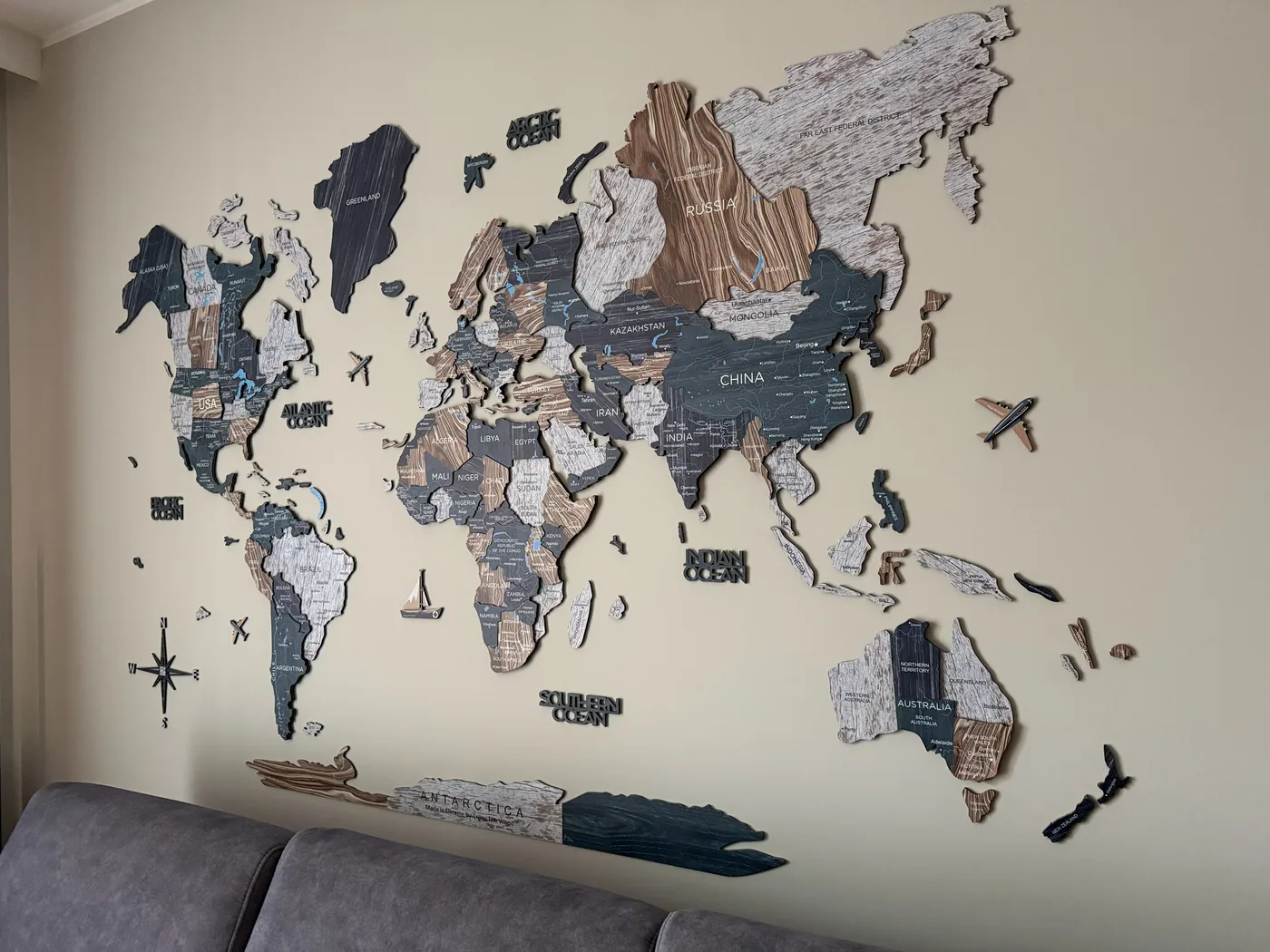
The map combines a geographic subject with different surface patterns and raised pieces. That can work as the detailed focal point in a layered room. We would keep nearby art simpler instead of surrounding every continent with additional decorations.
Installation took us about 4-5 hours. Most of the work was straightforward; locating the small islands took the longest. Everything needed for our installation was in the box. A framed print is a more practical alternative if you want to move the display frequently.
We have not tested removal or measured the glow duration. Do not infer damage-free mounting, hand carving or a solid-wood construction from the photograph. Read the installation notes before choosing this format.
Original map photos: Luminous XL owner review. Recorded checkout result: the Enjoy The Wood discount page separately shows the observed saving and its limits.
Adapt the Layers to the Room
Living room
Try the patterned rug or a large wall piece as the anchor, not both at maximum intensity immediately. Keep a usable place for drinks and leave storage for everyday things that are not part of the display.
Bedroom
Start with one patterned bedcover or a woven headboard, then add a plainer layer. Keep wall fixings appropriate for the object and position; avoid treating a heavy object above a sleeping area as a purely aesthetic decision. Compare options in bedroom wall decor ideas.
Kitchen and dining area
Display a few useful ceramics or a textile away from heat and splashes rather than covering preparation surfaces. Use items with appropriate food-contact and cleaning instructions. Decorative accessories do not automatically double as serving ware.
Edit Before You Buy Again
If the room feels busy, remove one pattern, clear a surface and look again from the doorway. If it feels flat, add one contrasting texture or a meaningful artwork. Neither problem necessarily requires another furniture order.
A useful final check is whether you can explain each new purchase: where it fits, what it adds, how it attaches or cleans and what the complete cost is. Build the collection slowly enough that the objects stay personal.