
Choose Reading, Dressing and Storage Priorities
List what must be reachable beside the bed and what needs to be stored elsewhere. Keep necessary equipment, controls and routes usable. The general dark academia guide separates the bookish association from historical and material claims; these projects concentrate on a bedroom's daily jobs.
- Brown, green and ivory
- Try a deeper cover beside the furniture you keep. A pale frame, white wall or plain bed can provide contrast without changing the whole suite.
- Taupe, gold colors and burgundy
- Compare one red textile or image with the actual metal finish. An aged-looking color is not proof that an object is antique or made of brass.
- Charcoal, slate and plum
- Cool colors can be part of the direction. Test them with existing bedding and useful light rather than rejecting them as automatically gloomy.
- Olive, terracotta and off-white
- Use a small detail as a starting point. The room can remain mostly pale; a bookish association need not depend on darkening every surface.
Photo Exercise: Keep a Useful Bedside Surface
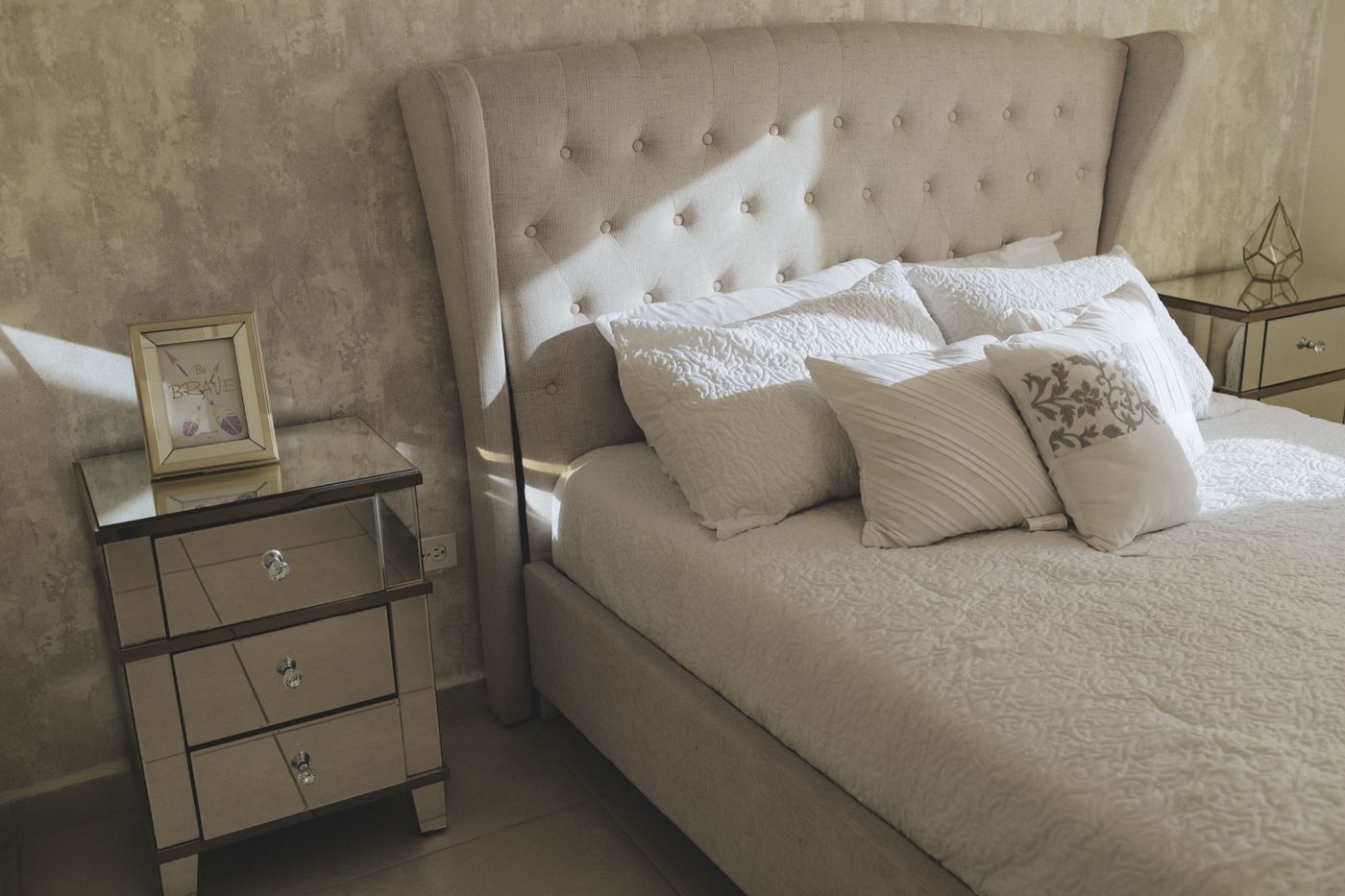
Imagine keeping the pale bed and cabinets while trying a darker cover and one personal map on an appropriate separate wall. Leave space for current reading and a suitable task lamp. The decorative object in the image is not a recommendation to light a candle; the photograph does not establish reach, lamp placement or mounting suitability.
12 Projects for Books, Bedding and Bedside Light
1. Choose a dark detail before a full repaint
Try a cover, frame or wall sample beside the bed and curtains. A single dark element can provide the contrast you want. If the main question is how much to paint, use the separate color-testing guide rather than treating this bookish theme as an all-wall instruction.
2. Keep usable furniture regardless of its finish
A pale chest, white laminate table or current bed can remain. Measure the space used by open drawers and normal routes before adding another piece. A substantial antique-looking cabinet is not automatically more useful than the furniture already serving the room.
3. Layer bedding for the way you use it
Compare a velvet detail, woven cover or herringbone throw with bedding you already like. Choose layers for actual use and care, not the weight of a historical image. Velvet describes a fabric structure, not a guarantee of natural fiber, comfort or improved sleep.
4. Make reading storage accessible
Choose a supported shelf, cabinet or drawer for the books you want near the bed. Keep titles easy to find and leave the bedside surface available for actual items. A full wall of books is optional; an e-reader or a small current collection is also compatible with a bookish bedroom.
5. Plan art for an appropriate wall
A map, drawing, portrait reproduction or current photograph can relate to an interest. Check complete frame dimensions, weight, wall construction and specified fixings. A large piece over the bed is not the automatic starting point; a facing or dressing wall can be a different project.
6. Provide useful bedside and general light
Try a book or device in the actual reading position and check glare, reach and controls. A suitable current lamp can stay alongside an overhead light. A vintage-looking lamp requires its own condition and electrical assessment; a brass finish is not evidence that it can be used safely.
7. Add a desk only if someone will use it
Keep room for bed access and dressing before inserting a writing corner. Choose a chair and surface for the actual work, whether handwriting or computer use. A standing desk or current equipment does not need hiding, and an open notebook is not a required prop.
8. Select curtains for actual light control
Compare privacy, glare, darkness and window access with the chosen fabric and fitting. A dark color is not proof of blackout performance; pale lined panels can be another option. Heavy, floor-pooling curtains are not a guarantee of better sleep or an obligation of the style.
9. Assess a bed or headboard by its real construction
An iron outline, carved-looking panel or four-poster may be a candidate, but confirm support, dimensions, fixings and care before replacing the bed. A dramatic headboard is not automatically suitable for the available wall. Keep useful current support rather than buying presence alone.
10. Choose a rug for the path around the bed
Try the full dimensions with doors and storage open. A plain or pale rug can remain; a regional-style pattern does not prove provenance. Inspect edges, care and condition before layering another rug, and keep electrical cords out from underneath.
11. Give a few objects a supported place
A globe, model, photograph or small clock can have personal meaning without pretending to be an antique. Keep lamps, water and necessary equipment within reach. Do not balance a heavy display on loose book stacks or turn those stacks into bedside furniture.
12. Plan a picture group before buying frames
Compare the full arrangement with the dressing area, bed and doorway. A small group can be enough. An ornate frame or floor-to-ceiling salon wall is optional; access and mounting needs matter more than making the collection appear inherited.
The US Fire Administration advises against lit candles in bedrooms and sleeping areas. Its electrical guidance covers rated bulbs, combustibles near lights and avoiding pinched cords under rugs. An atmospheric image is not a lighting or safety assessment.
Give Books and Wall Art Separate Plans
The bookshelf planning guide covers access and display. A supported shelf is different from using loose stacked books to hold a table surface or heavy object. Arrange the collection to find the titles you want rather than turning spines inward for an aged effect.
If combining maps, portraits and illustrations, plan a gallery wall layout before buying more frames. The bedroom wall-art guide compares positions, full dimensions and fixing questions. A recent reproduction or personal photograph can be enough; no particular retailer is required.
Five Checks Before Starting
- Keep normal access. Open wardrobes and drawers and try the route to the bed before adding a bookcase, desk or chair.
- Use actual reading needs. Choose light and accessible storage for what you read, including digital devices. You do not need old hardbacks to perform a scholarly identity.
- Keep flame out of the sleeping area. Use an appropriate lamp or a flameless decorative option rather than bedside candles. Decorative darkness is not a visibility plan.
- Check objects, not labels. Compare condition, size, care, support and fitting. Neither antique-looking nor natural establishes quality or a suitable bedside use.
- Keep decoration separate from sleep claims. Color, textiles, a gallery or a heavy curtain are preferences here, not treatments or measured sleep improvements.
For a paint-and-contrast decision rather than books and dressing storage, use the dark-bedroom sampling workflow. For an everyday light, access or bedding issue, compare practical bedroom planning without sleep promises.