
Start with Conversation, Reading and Everyday Storage
Mark the seats, screen, route through the room and surfaces used for drinks or devices. The dark academia style guide covers the broader historical-image and material references. Here, compare changes around the occupied room rather than copying a library set.
- Charcoal and cream
- Compare one charcoal surface or textile with existing pale upholstery. Keep a white ceiling or contemporary table if useful; the darker element need not cover every wall.
- Green and ivory
- Try green beside the actual wood finish and books. This is a sample pairing, not a requirement for walnut, leather or aged brass.
- Burgundy and brown
- Use red in one cover, picture or rug before choosing a major purchase. Compare it with retained furniture under the room's daylight and lamps.
- Near-black with contrast
- A darker cabinet or frame can sit with pale textiles, a blue detail or chrome. The room does not need to imitate an exclusively warm-toned library.
12 Projects for Seats, Books and Personal Art
1. Choose how much dark color to introduce
Compare one wall, a cabinet, a textile or a full-room repaint as different projects. Test the actual sample beside the floor and sofa. There is no halfway failure: a darker picture frame or one green cover can be enough when the existing room already works.
2. Keep or select a sofa for occupied use
Try sitting, rising, cushion support and the cleaning routine. A Chesterfield or tweed cover can be a visual reference, but a light contemporary sofa can stay. Upholstery and tufting do not establish comfort or turn a room into a genuine historic library.
3. Store the books you actually want
Measure the collection and plan accessible shelves or closed storage with appropriate support and fixing. Floor-to-ceiling built-ins are optional. Keep books organized for finding them; worn spines, new paperbacks, a coordinated series or a digital-reading device can all belong.
4. Choose a rug for the route through the seats
Compare the full rug dimensions with chairs occupied and doors moving. Inspect condition, fiber, care and edges before buying an older piece. A regional-style pattern does not prove origin or age, and a plain rug can remain. One suitable rug may be better than several overlapping layers.
5. Keep light useful for reading and conversation
Read an actual page from the seat and check glare, shadows and switches. Keep general and ceiling light where helpful, then compare a task lamp. An amber appearance is an option, not a reason to use candlelight only, ban LEDs or reduce visibility throughout the room.
6. Use a mantel or cabinet as a limited display
Select a picture or a few objects and check their support, rather than covering a working fireplace with books and cloth. Follow the actual fire or appliance installation requirements. A cabinet can be the focus when there is no fireplace; no new hearth or candle arrangement is required.
7. Add a desk only for a real task
Use a writing or computer corner if someone wants it and it fits without taking away storage or movement. Keep the practical desk and chair, including an adjustable setup. The room may be used for television as well as reading; neither activity needs to be disguised to suggest intellectual seriousness.
8. Choose curtains for glare, privacy and movement
Compare lining and fabric with the light control needed at the seats and screen. A heavy fabric can be a visual option, but pooled fabric and an assumed soundproofing effect are not requirements. Check access to windows, heat sources and the selected hanging system.
9. Display a map or curiosity for its actual subject
A recent city print, inherited globe or model can relate to a place or interest. Check condition, support and provenance where relevant. A replica or current print can be a deliberate choice; its appearance does not establish age, working accuracy or the owner's education.
10. Put a stable table within reach
Compare height, surface, support and access from the occupied chair. A dark turned-leg table is one outline, while a plain newer table can stay. Leave space for a drink, lamp or device rather than requiring every surface to carry a display.
11. Try a reading chair without assuming a fireplace position
Place an existing chair where the user can sit, rise and reach suitable light. Add a surface for actual items if needed. A wingback is not automatically comfortable, and a photograph of a chair beside a fire does not establish appropriate clearance in your room.
12. Plan one picture or the whole group
A portrait, drawing, map, photograph or abstract work can be chosen for personal interest. Compare the full frame size and hanging requirements from the sofa and doorway. Formal rows and a loose gallery are options; a room does not need floor-to-ceiling ornate frames to qualify.
The US Fire Administration's electrical guidance covers correct bulb wattage, keeping combustibles away from lights and avoiding pinched cords under rugs. A decorative lamp finish or staged photograph is not an installation assessment.
Our Wooden Map Is a Personal Choice, Not a Historical Requirement
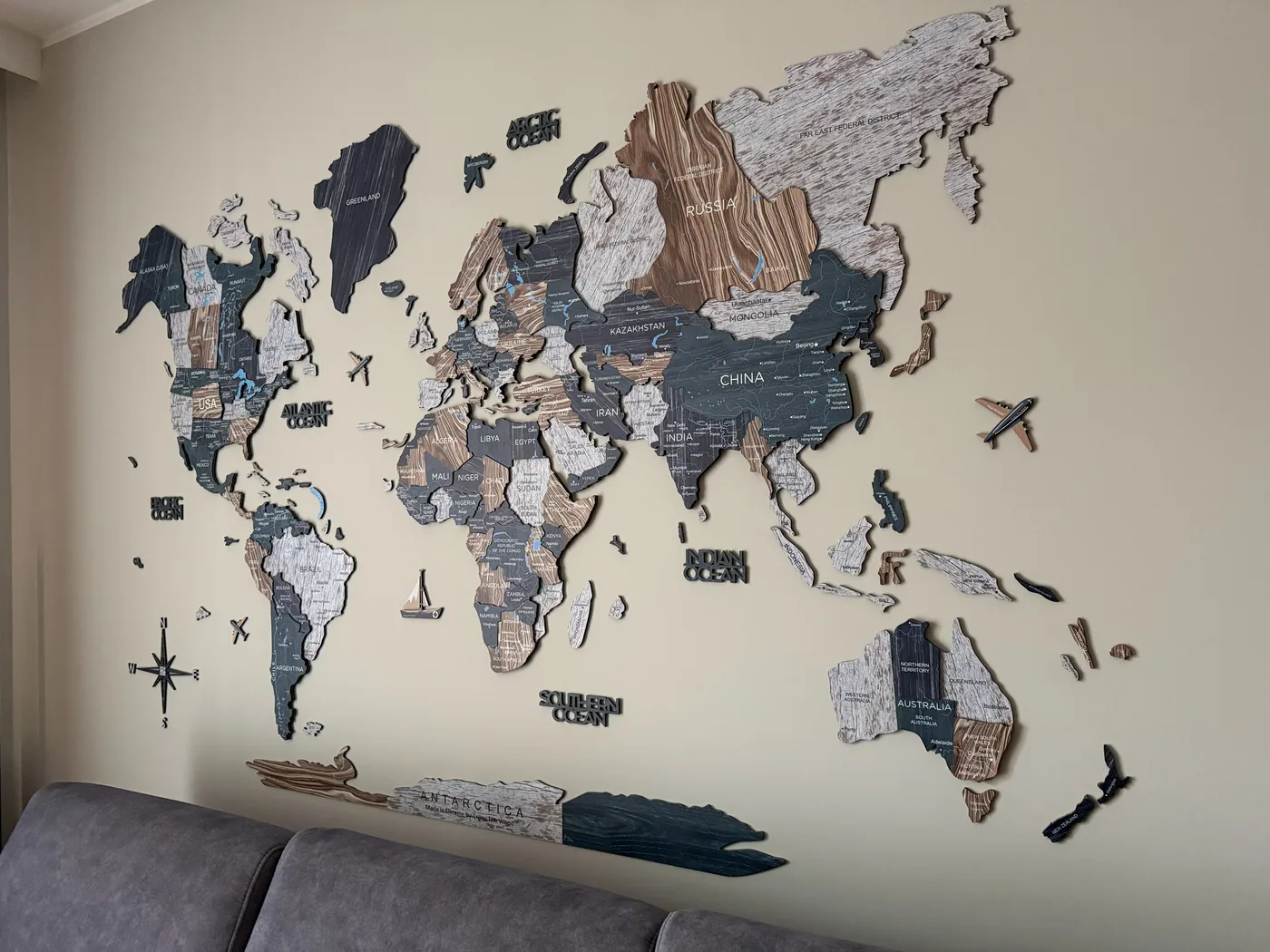
We own an XL 3D Luminous Colored Wooden World Map. Installation took 4-5 hours, with the small islands taking the most patience; the supplied kit had everything we needed. This is not evidence of geometric-panel or city-map availability, hand carving, permanent mounting or a scholarly effect. A framed paper map can be a different, equally deliberate choice.
Compare the owner review and original photos, map-size planning guide and dated discount-code evidence. The recorded result is not a live guarantee for every cart. US and international shoppers should check current eligibility, destination, delivery and total with the store.
For a picture group instead, plan the complete gallery wall layout. The living-room wall display guide compares positions without requiring a large affiliate product.
Five Checks Before Adding More
- Keep the occupied layout. Try conversation, screen viewing, reading and table reach before adding a desk or another chair.
- Check books and display support. Use storage and fixings appropriate to the collection; a bookish look is not a load specification.
- Keep useful light and current equipment. General light, LEDs, a television or an e-reader can remain. Do not conceal controls or run cords under rugs for a picture.
- Separate age from usefulness. A newer table or reproduction can be the better fit. Include transport, repair and fitting in the cost of an older piece.
- Choose one personal detail. A picture, bookcase or textile can carry the association. There is no required density of objects, warm undertones or antiquarian props.
Compare traditional living-room planning for another furniture direction, or bookish bedroom projects for bed access, dressing and bedside storage. The rooms need not repeat the same quantity of furniture or display.