
A Five-Step Furniture Comparison
Here, eclectic means combining personally chosen pieces rather than following one collection. It is not a ranking of taste or a claim that a room bought at one time is less of a home. These five steps turn a broad style question into a particular furniture decision.
- Start with the pieces and jobs you want to keep. List the seats, table, storage, lights and personal objects that already serve you. Note a particular problem separately from a dislike of a style label. A matching set, inherited object or inexpensive piece does not need replacing to qualify as eclectic.
- Compare the occupied arrangement. Sit, reach for a drink, open storage and walk through the proposed layout. Record full dimensions and delivery access before judging whether a second piece looks too heavy or delicate. Equal visual weight is not a substitute for a useful table height, seat or route.
- Try one visible relationship. Compare an outline, a color, a finish or a pattern. For example, a curved arm and round table, or a dark frame beside an existing metal fitting. You can repeat a detail without repeating it twice in every category or making all the wood, metals and fabrics match.
- Make a comparison without buying a bridge. Move an existing object, try a material sample or mark a proposed footprint on paper. Compare the current arrangement with one change at a time. A third item is an option, not the required cure for two pieces that do not seem to relate.
- Check the exact purchase and the option to keep it as it is. Compare construction, condition, care, support, assembly, delivery and return terms for the selected item. A style name, famous outline or aged finish does not answer those questions. Keeping both pieces, moving one or buying nothing can be the result.
Four Palette Approaches, Not Rules Every Object Must Obey
- Existing neutrals with a personal accent
- Keep the sofa, floor and curtains, then compare a color from a picture or textile. Beige is not an obstacle, and an inexpensive or matching piece does not make the room less personal.
- A warm or cool direction, or a deliberate mixture
- Compare actual samples beside the retained finishes. An all-warm or all-cool scheme is an option, not the only coherent result. Contrast between a warm wood and cool-looking metal can be intentional.
- Two colors to revisit
- Try two colors from an existing object in another small sample or picture. Repeating them may help you compare, but a single unusual color can remain a deliberate detail rather than an error.
- Jewel tones or a larger pattern
- Compare a deep blue, green or patterned surface with the pieces you retain. A bold wall or sofa can be the focus if you enjoy it. There is no requirement for one dominant piece, one quiet surface or a fixed number of contrasting colors.
Compare actual samples in your room's light. A color palette is one way to organize a proposal, not proof that every piece must share a color with two others. Choose the amount of contrast you enjoy without treating an inherited or necessary item as a mistake.
Five Pairings to Compare With the Pieces You Have
- Mid-century reference and a current piece
- Compare the actual chair and table outlines, occupied height and finish. A clean line can be a visible relationship without claiming both designs share an origin. You do not need an authentic collectible to try a shape comparison.
- Contemporary and rustic-looking
- Compare the smooth surface with the textured one, then check actual construction, condition and care. A reclaimed description needs evidence if it matters. Rough wood is not automatically a better table, and a third natural accessory is not compulsory.
- Japandi and industrial references
- Compare a simple cabinet with a metal-framed object while keeping storage and circulation useful. These are references for forms and finishes, not proof of a shared historical philosophy or an instruction to expose raw materials.
- Older and newer furniture
- Assess the actual older piece before changing it. It can remain unaltered beside a new item; reupholstery, repainting or distressing is not the automatic solution. Ask about condition, provenance and suitable specialist help before work on an uncertain or valuable object.
- Bohemian patterns with simpler furniture
- Try a textile or a personal collection beside the furniture you keep. Compare pattern repeat, care and full layout. A regional rug name, macrame appearance or travel story cannot establish who made an object or its suitability for hanging or seating.
These are comparison briefs, not proven combinations or bans on other pairings. An ornate cabinet and plain shelf, chintz and chrome, or several eras together are not automatically wrong. For the specific references, compare mid-century room planning, Scandinavian references and Japandi design.
A Famous Shape Is Not One Shared Era or Provenance
Check a named design rather than putting all familiar lounge furniture into one mid-century category:
- Barcelona Chair: designed 1929
- MoMA's record, object 552.1953, identifies Ludwig Mies van der Rohe, a 1929 design and its particular 1953 example manufactured by Knoll. The design date and the manufacture date of one object are not the same thing.
- Eames Lounge Chair and Ottoman: 1956
- Herman Miller's design story identifies Charles and Ray Eames and its 1956 television debut. This names a particular design, not every chair advertised with an Eames-style description.
- Togo: 1973
- Ligne Roset's Michel Ducaroy biography dates his Togo design to 1973. A 1970s design and a 1929 design are not evidence of one shared period or the same construction.
These records supply historical context, not authentication of a seller's listing. Ask about the exact maker, edition, materials and provenance if those matter. A similar outline, famous name or merchant photograph does not establish licensed production, faithful reproduction or the selected product's comfort.
Compare Two Chair Outlines Before Naming Their Styles

The left chair has a more enclosed outline; the right chair exposes curved arms. Compare those outlines with the round footstool, table and rectangular opening. That is a specific visual relationship without deciding every item must share one era, timber or metal. The image alone cannot establish whether the table is within comfortable reach from either occupied seat.
For a hypothetical comparison, mark a retained chair and the complete candidate table footprint on a room sketch. Record occupied reach, movement and the opening before judging the outline. Try keeping the current table as an alternative; this is not a layout or furniture pairing we measured.
Six Eclectic Living-Room Projects
1. Keep a useful sofa before choosing a statement
Try the sofa occupied with the chair and table you already use. A bold cover can be compared with plain upholstery, but an ordinary neutral sofa can stay. Include seat comfort, getting up, cover care and the complete footprint before choosing a different era or silhouette.
2. Compare seating eras through the actual seat and table
A carved chair, a current sofa and a woven stool may provide different outlines. Check their stated use, support, height, reach and the route around them. Different historical labels do not establish compatibility, and a delicate side table need not have the same visual weight as the chair.
3. Try the rug, pattern and curtains as one view
Compare an actual textile repeat beside the current rug and window covering. One large pattern with a smaller one is an editing option, not a universal three-scale rule. Plain curtains and a single rug can stay. If layering rugs, check edges, movement and actual care rather than buying by a claimed regional origin.
4. Compare a wall color with the complete gallery
Try paint or wallpaper samples beside paper outlines of the framed group before committing to either. Mixed subjects and frame finishes can be intentional. Measure the full arrangement and fixing requirements; a floor-to-ceiling gallery or one large statement per wall is not compulsory.
5. Give mixed metals and collected objects a useful location
A metal lamp, ceramic, postcard or inherited object can sit beside contemporary storage. Ask about a particular maker or origin when it matters, not for a required globally influenced purchase. Plan loaded shelves and ordinary access. A room need not look accumulated over decades or hide the fact that an item is new.
6. Choose useful light and leave ordinary surface space
Try reading, controls, glare and the table space you need before selecting an unexpected fitting. A decorative lantern or antique oil lamp is not automatically an electrical lamp; do not copy a conversion from a decorating list. Keep the exact fixture and bulb requirements rather than a universal 2700 K rule.
The maximalist living-room guide offers another collection-and-pattern brief, not a less considered way to decorate. For a practical surface comparison, use rug planning. You do not have to add a rug for the furniture to belong together.
Six Eclectic Bedroom Projects
1. Keep the bed and compare nearby furniture
Try bed access and opening storage before adding a dresser, bench or chair from another period. A plain bed, an upholstered frame or two pieces from the same collection can stay. The room does not need a statement headboard or a different era for every object.
2. Compare a palette departure with the wall you retain
Try a color or wallpaper sample beside the actual bed and floor. An unexpected accent can be one option, not a compulsory clash that makes the room more eclectic. A patterned or plain background can both work with the objects you want to keep.
3. Choose bedding and rugs for their actual use
Compare patterned and plain textiles at the scale you would use, then read composition and care information. Velvet describes a fabric construction, not a guarantee of fiber content. Linen, silk, wool, blends and suitable synthetics can be considered without ranking them as luxurious or humble. Extra rugs or bedding patterns are optional.
4. Place a personal collection without assuming it belongs overhead
Try the full framed group above a dresser or on a facing wall as well as considering the bed wall. Include frame weight, fixing and nearby lights. A textile, postcard or ceramic can be meaningful without an invented cultural story; handmade appearance does not settle provenance or ethical questions.
5. Make mixed bedside finishes serve the routine
Compare usable surface, drawer access, lamp controls and stability before choosing wood, brass, black or chrome. Different tables can work, but a matching pair can remain useful too. No metal has to appear twice for the room to count as intentional.
6. Keep useful reading light, privacy and dressing space
Test switches from the bed, the window covering at the times you use it and normal movement around storage. A sculptural fitting is optional, not a replacement for needed light. Bold patterns are not automatically unsuitable for a bedroom, and this guide does not test a style as a way to improve sleep.
Compare the bohemian bedroom projects for textiles and collected objects. The distinction is the brief you choose, not whether one style is more deliberate or its occupants more interesting.
Our Wooden Map Is One Subject, Not a Universal Bridge
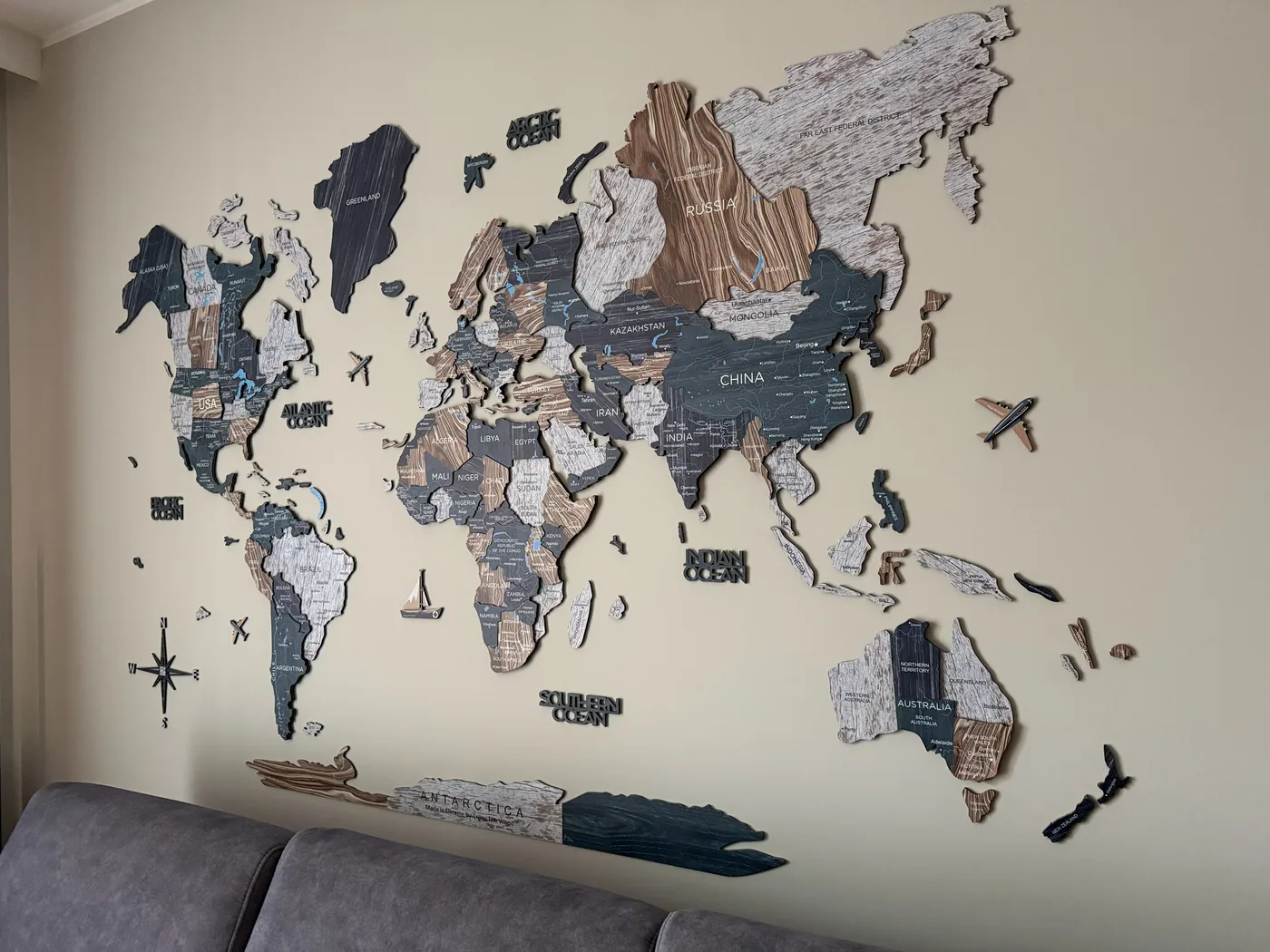
We own the 3D Luminous Colored Wooden World Map in XL. Installation took 4-5 hours, with the small islands taking the most patience; everything needed for our installation was in the box. Our owner review and original photos cover that experience. We have not tested removal, measured glow duration or compared every model.
Choose the map for its geographic subject and complete layout, not because wood supposedly connects every furniture style. A framed photograph, painting or mixed group can be the better choice. Compare the map-size guide, living-room wall options, bedroom placements and full gallery layout before buying. The picture does not measure a suitable size for your wall.
Buying evidence is separate: the Enjoy The Wood code and dated checkout record covers a selected cart, not a live offer guarantee or a price for this exact owned XL configuration. Check current eligibility, destination, delivery and total for US and international orders. For a personal location print instead, the Mapiful buyer guide covers the actual preview, format, frame and custom-order questions; we have not tested a print for this arrangement.
Dining and Office Furniture Still Have Ordinary Jobs
- Dining and kitchen area
- Try each chair at the occupied table, including support, seat height, serving space and routes. Same-height chairs are not automatically compatible, and a matching set can stay. A wooden board or serving object is a separate food-use and care decision, not proof of a link between modern appliances and traditional cooking. The wooden kitchenware buyer guide covers exact materials, personalization and order questions, not a product test.
- Home office
- Keep the desk, chair, equipment and storage useful before moving a collection to the perimeter. A personal picture can coexist with current furniture without matching its finish. The office wall and layout guide compares those tasks without making the desk a prescribed style anchor.
CPSC's Anchor It guidance addresses furniture and TV tip-over prevention; an older, heavy or decorative cabinet is not exempt because it looks substantial. USFA electrical guidance covers combustible objects near fixtures, bulb ratings and cords. Follow the actual product and appropriate qualified advice for support and installation, not a style photograph.
Four Useful Outcomes of the Comparison
- Keep both pieces
- After trying the occupied arrangement, the contrast may be something you enjoy. It does not need a repeated metal, new rug or documented period relationship.
- Move one piece
- Try the table, chair or picture elsewhere before treating its style as the problem. Check the destination's actual use and support too.
- Change one detail
- Compare a removable textile, frame or suitable small object with what stays. This is an option for a specific visual question, not a requirement that every mismatch have a bridge.
- Buy one specified replacement
- Choose the selected item for the job, dimensions, construction, care and complete cost. Do not replace useful furniture simply because a rule says matching sets look cheap.
For a selected made-to-order chair, table or light, the Homio Decor buyer guide covers configuration, material specification, destination, complete delivery quote and return restrictions. We have not tested its furniture or verified a faithful reproduction. A named collection is not evidence that every item is an original designer piece or works with everything around it.
Try the current arrangement and one alternative during normal use before ordering. No 70/30 ratio, maximum of three styles, one-metal rule, mandatory bridge or new rug is necessary. Sources and article checked November 16, 2026.