
Make the Bedside and Dressing Brief First
List what you need beside the bed, the way wardrobes and drawers open, a dressing position and window access. The general grandmillennial guide covers the label, textile history and optional sampling method. This room brief concerns using the bed, storing bedding and getting dressed, not making every corner look inherited.
- Rose, sage and cream
- Try a floral sample beside your existing bed and floor. Gold-colored details are optional; the whole furniture suite does not need to match.
- Blue and white
- Compare a blue patterned cover with bedding you already like using. Plain white and cool blues can remain part of the room.
- Garden colors
- Try blush, green or lavender in a small textile or picture. A botanical subject does not require flowers, live plants or fragrance.
- Deeper library colors
- Compare a dark cabinet, green cover or rose accent with the actual room light. Darker color does not establish better rest or a more authentic room.
Photo Exercise: Change a Cover, Not the Whole Bed
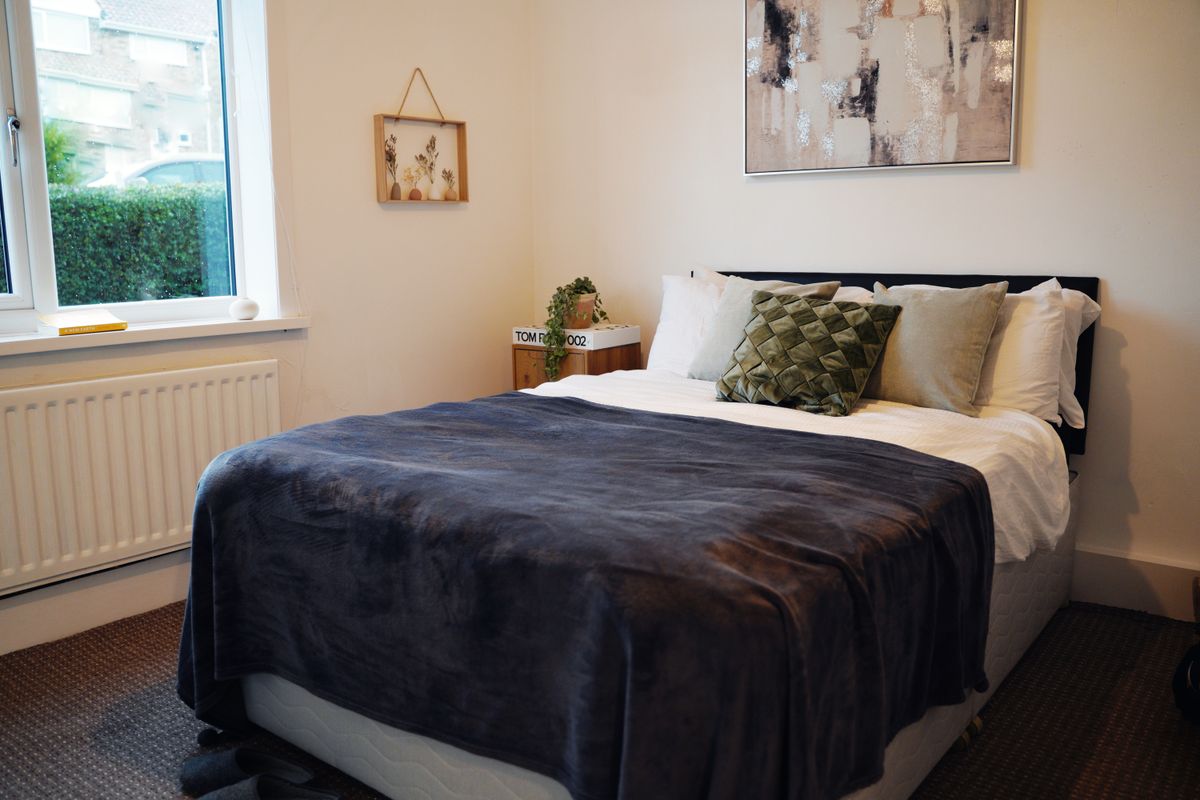
Keep the plain bed, pale walls and dark cover in this starting arrangement. Imagine comparing a floral pillowcase or quilt sample with the patterned cushion, without adding extra layers you do not want to use. A botanical picture could go on a facing or dressing wall instead of over the bed. The photograph does not establish the furniture dimensions, growing conditions or fixing suitability.
12 Projects for Bedding, Dressing and Storage
1. Keep a usable bed and consider its headboard separately
Check bed access, sitting, rising and support before choosing a visual change. Floral upholstery, a stripe or a plain headboard are all options. Compare the fabric's intended use and care, and check fitting requirements before changing a headboard. It does not need to be the boldest pattern, and a current platform or metal bed does not invalidate the room.
2. Layer bedding only as far as you like using it
An embroidered cover, patterned quilt or scalloped edge can supply a decorative detail. Start with bedding that suits your own comfort and cleaning routine. Try one layer, then decide where it goes when not in use. Multiple covers and extra cushions are optional; their quantity does not prove better sleep, warmth or the care you put into the room.
3. Compare a wallpaper sample without committing the whole room
A floral, toile or stripe may be interesting behind a bed or on a dressing wall. View a sufficiently large sample with the bed and floor in the light you actually use. Confirm the wall, installation, permission and removal needs before ordering. Keep a plain wall if it works; a wallpaper label does not guarantee damage-free removal or a particular feeling.
4. Choose a trim detail you can maintain
Try a ruffled pillowcase, piped cover or scalloped edge if you enjoy its detail and care. Check seams, fastening and anything that could catch while dressing or moving through the room. A printed rather than embroidered cloth is also an option. A frill does not establish handwork or quality, and a plain cover can remain beside it.
5. Make a dressing table serve an actual routine
An older desk, painted table or current dressing table can provide a place for grooming or other daily tasks. Check seat and knee space, drawer opening, mirror view and useful light. Keep enough clear surface for what you use instead of covering it with display objects. A particular antique shape or triptych mirror is not necessary.
6. Choose window treatments for access, light and care
Compare a floral or striped curtain with a plain option. Ask about lining, finished dimensions, heading and care rather than assuming every fabric performs alike. Check window operation, any needed light control, radiators and the walking route. Curtains do not need to pool on the floor or look decades old; keep access practical.
7. Check a chest before changing its finish or handles
Inspect the actual unit, drawer movement, restraint and any damage first. A painted, plain, flat-pack or older chest can be useful. Confirm that a proposed handle fits without interfering with drawers and check the selected finish or repair method rather than sanding an unidentified old coating. Refinishing is optional, not a necessary way to make a new unit legitimate.
8. Give a small collection a defined display area
A few photographs, bottles or ceramics can sit on an appropriately supported surface away from the space needed for dressing. Leave room to lift, clean and use them. Newly collected objects can be meaningful; real age is not required. Check the household and the selected objects before placing breakable or small items within reach.
9. Add a chair only if it has a useful position
A cane-back, painted, upholstered or current chair can be a place to sit while dressing or reading. Check condition, support and access around the bed and wardrobe. A corner seat is optional, not a styling obligation. If the room needs that space for movement or equipment, keep it open rather than adding a decorative chair.
10. Put usable light and switches within reach
A ceramic base and pleated shade can be an option, but choose the whole lamp for the task and fitting. Check switch reach, bedside space and light where you read or dress. Match the recommended bulb wattage and keep combustible materials away. An amber pool alone may not provide the light you need; do not add loose trim to a working shade.
11. Choose a rug for condition and daily movement
A faded floral, needlepoint or other pattern can be enjoyable, including a new version. Look at the actual condition, edges, cleaning needs and relationship to doors, drawers and the route around the bed. Worn does not automatically mean better. A plain rug or the existing floor can stay, and electrical cords should not run beneath a rug.
12. Keep personal books or objects without compulsory scent
Make room for reading, necessary equipment or something you want to look at from bed. Flowers, plants, perfume and dried stems are optional, not evidence of an inhabited room. Keep essential bedside items reachable. A plant-free or fragrance-free bedroom can express the same taste through a cover, picture or another personal object.
For dressers and other storage, follow the selected product and fixing requirements; CPSC's Anchor It campaign covers tip-over prevention. The US Fire Administration's electrical guidance covers bulb wattage, combustible materials near lamps and cords beneath rugs. Its candle guidance advises against lit candles in bedrooms and sleeping areas. A fragrance or flame is not part of the decorating brief.
Choose the Picture and Wall Together
A botanical illustration, embroidery, portrait or personal print can be a candidate, not an obligation to buy an oversized piece for above the bed. Compare how the complete frame reads against a plain or patterned wall. Keep its weight, glass, fixing method and actual wall separate from whether you like the subject. See bedroom wall-art options and planning.
For a current place or date print, the Mapiful buyer guide covers the preview, format, framing and custom-order terms. It is not a certificate of period authenticity or suitability above a bed. Reuse pictures and frames you already enjoy when they meet the actual display requirements; one image on a facing wall can be enough.
Five Checks Before Adding Another Layer
- Keep access before adding furniture. Open drawers, walk around the bed and check the space used for dressing. Retain room for equipment or help you need.
- Try the actual bedding. Choose layers for your preferences and care routine, not a rule about how much labor a styled bed should display.
- Let the samples decide. Cool, white, dark and neutral colors can stay. Compare the actual textile, wall and floor before replacing them.
- Separate display from support. Confirm the full picture, mirror or shelf weight and actual wall/fixing requirements. A photo or style label is not an installation assessment.
- Stop after one useful change. A patterned cover or small display does not require a new bed, antique dresser or matching rooms elsewhere.
For the different problem of conversation seating and collections, see grandmillennial living room projects. A useful bedroom does not need to repeat that room's arrangement or quantity of objects.