
Keep the Seats and Storage That Already Work
Write down the sofa, chairs, table and cabinet you want to keep. Sketch door movement, the television and the routes people take. Then compare two starting points: keep the neutral sofa and test a colored chair, or keep the seating unchanged and test a wall display. Those are different costs and commitments, not a ranking of which looks more authentic.
Use the Hollywood Regency reference guide for Haines and Draper examples and shared finish choices. Here, the focus is the everyday living-room arrangement: conversation seats, screen views, serving space and a display you enjoy.
Four Palette Directions to Compare
- Green upholstery, lighter wall
- Keep the green on a sofa, chair or cushion and compare it beside the existing wall and floor. A gold-colored table can be one detail; it does not require changing the door handles or ceiling fitting.
- Blue with a patterned companion
- Try a blue textile beside a stripe, floral or geometric sample. Choose the amount and location of each from the room itself; a second jewel tone is not automatically a conflict.
- Pink with existing silver-colored details
- Compare pink or blush beside the actual frame, lamp or table finish you own. Pale color and silver-colored metal can remain. This is a sample combination, not a rule for who the room belongs to.
- Black and white with a personal picture
- Use a dark frame or cabinet to outline a light surface, then try a colored picture or fabric. A small meaningful work can supply the accent without a whole mirrored wall or glossy repaint.
12 Hollywood Regency Living Room Projects
1. Let the sofa you keep set the seating plan
Record who sits where, the screen view and the route through the room before choosing a color. A neutral sofa can stay while a cushion, chair or picture supplies the stronger accent. If replacing it, compare full dimensions, comfort and delivery access separately from a velvet-looking photograph.
2. Try a wall sample before a gloss project
Compare a large color sample with the sofa, floor and daylight you already have. Look from the seats as well as the doorway. Matte, satin or a glossier treatment are alternatives; preparation, product instructions and the actual surface determine the work. A lacquer-look image is not a paint specification.
3. Test a mirrored surface from the occupied seats
Before adding a mirrored console or table, consider what it will reflect from the sofa and reading chair. Compare glare and distracting views with a less reflective alternative. Check the selected item's construction, edges, cleaning and support rather than assuming several mirrored pieces always improve the room.
4. Compare a ceiling statement with useful task light
Keep a working ceiling light if it serves the room. A pendant or chandelier is an optional fitting project: compare headroom, complete size, support and installation requirements. If you want dimming, establish compatibility with the actual lamp and fitting. Decorative appearance does not certify electrical suitability.
5. Choose metal details individually
Try the existing silver-colored lamp beside a gold-colored frame or dark table. Repeat a finish if you like the result, not because every visible metal must match. Verify the selected material and coating; a gold appearance alone does not establish brass, gold leaf or durability.
6. Make the curtains work when open and closed
Compare a patterned fabric or pleated heading with the privacy and daylight you want. Check the curtain's open stack, window controls, care and selected support. A shorter treatment or appropriate blind can work too. Keep routes and specified heat clearances usable instead of requiring fabric to pool on the floor.
7. Add the chair that improves the conversation
Try one chair where someone can sit, reach a table and join the main seats. Add a second only if the room works with both occupied. Different upholstery can connect through a repeated color or shape. A pair is optional, and a substantial chair should not consume the route just to create a symmetrical photograph.
8. Give a console or serving trolley a specific job
List what it needs to hold: books, cups, a music player or things used when guests visit. Compare opening space, access and cleaning with an existing cabinet. A bar cart and decorative bottles are not compulsory. Check the actual furniture's restraint and use instructions, especially when considering a mobile item.
9. Put a decorative mirror where its view is useful
Try the proposed reflection from several seats before selecting a sunburst, plain or another frame. Include the complete frame size, weight and fixing requirements. A console wall can be more useful than a fireplace position. Check the fireplace's own instructions before proposing anything exposed to its heat.
10. Keep everyday surfaces usable
Group a picture, small sculpture or another object you enjoy while leaving space for cups, controls and things used daily. A clear area or one personal object can be deliberate. Appearance and price do not establish authenticity or value, and the coffee table does not have to imitate a film-set photograph.
11. Compare cushion combinations as complete groups
Lay the covers you own beside one new sample before ordering a set. Try plain with patterned, or two patterns at different scales, and keep the combination you enjoy. Consider feel, laundering and where cushions go when people sit. There is no minimum cushion count or ban on a small print.
12. Plan lighting for different activities
Try the reading light, main room light and any decorative lamp separately from the positions people use. Check switches, cord routes and glare against the mirrored surfaces. An amber glow is an appearance choice, not a guarantee of intimacy or comfort. Extra candles are not necessary to complete the lighting scheme.
If you are comparing a chair, the Homio Decor buyer guide lists ordering and specification questions. Verify the selected item's full dimensions, upholstery, availability and delivered total. Compare a sample and sitting experience where possible; a photograph alone cannot establish comfort.
A Photo Exercise: Choose What You Would Keep
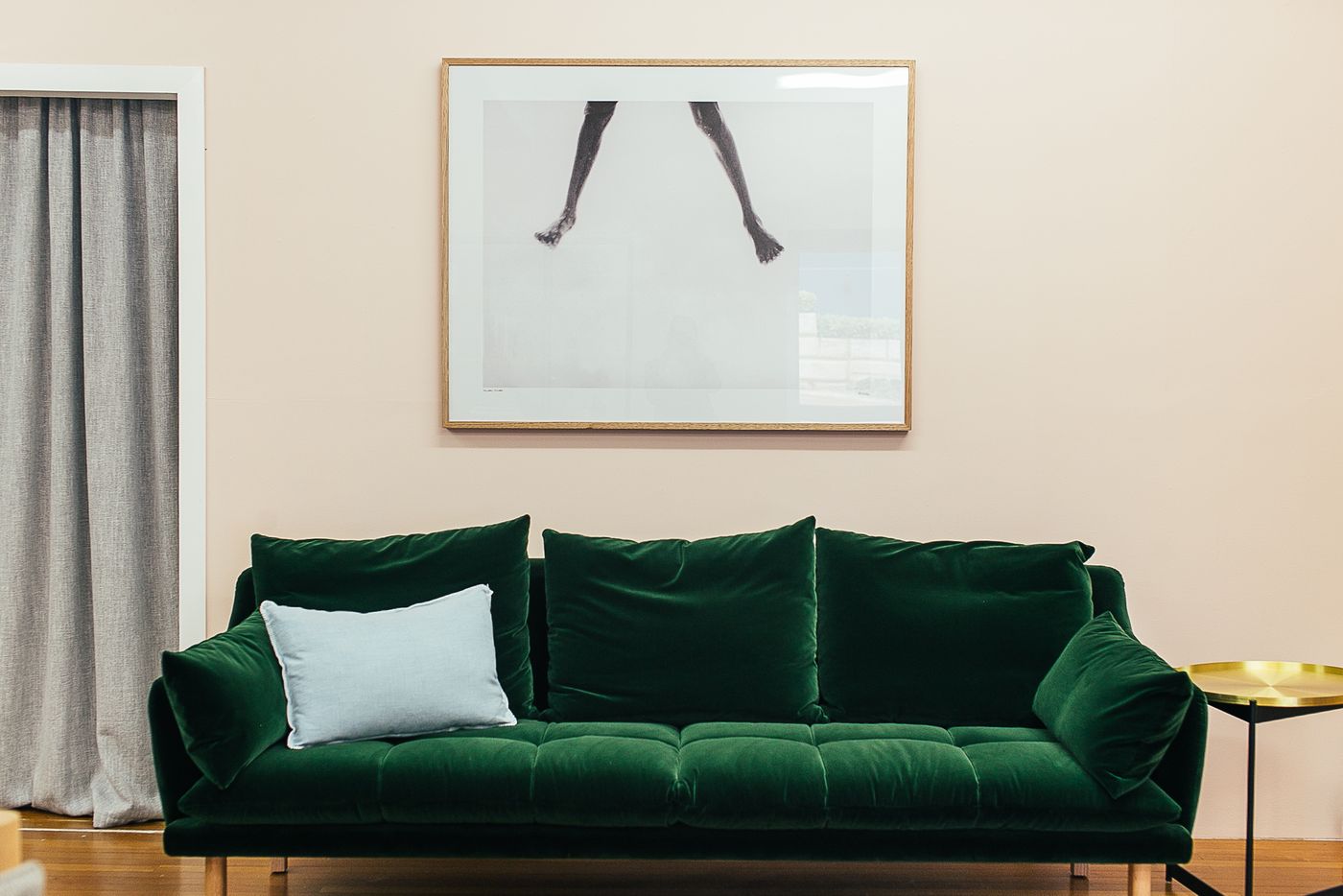
The colored sofa, simple cushion and small table give you three separate decisions. You could leave the upholstery alone and compare another picture, or keep the picture and test a patterned cover. The image does not show the full room or establish spare space for another chair, unseen supports or fabric composition.
The living-room wall guide compares display formats. For a personal place or star print, the Mapiful guide adds preview, wording and finished-frame checks; no particular subject or retailer is required for this room.
Five Checks Before Ordering
- Use: try occupied seating and open storage before deciding on a larger chair or paired layout.
- Reflection: check screen views, lamps and mirrors together rather than assuming more reflection is always useful.
- Support: follow actual furniture and mounting instructions. CPSC Anchor It guidance covers furniture/TV tip-over, not every decorative mirror or trolley.
- Lighting: use the USFA lamp and electrical guidance on suitable wattage, combustible separation and cord damage under rugs. Establish the selected fixture's requirements separately.
- Cost: include repair, fitting, delivery and applicable taxes; compare a small first change with a full replacement before choosing.
For bedside reach, dressing mirrors and bedding, use the separate Hollywood Regency bedroom guide. A living-room conversation plan is not a bedroom layout.