
Start With the Items and Money You Actually Have
List what works, what needs attention and what you simply want to change. Set a spending limit you are comfortable with, including zero for now. Ask anyone sharing the room before changing its layout or removing belongings. A room can need storage capacity or repairs rather than another accessory.
- Try moving an existing small item or lamp if it solves an access or reach issue.
- Rearrange a drawer or bedside surface around the things you actually use.
- Try a cover, photograph or textile you already own in a different place.
- Measure before committing to a larger furniture move, checking doors and storage in use.
Those trials may avoid a purchase, but effort, materials, repairs and help can still have costs. Do not label buying bulbs or mounting new shelves as free. There is no need to clear every surface or imitate a hotel before you are allowed to make a useful change.
Ten Projects to Price, Not a Universal Value Ranking
1. Keep, repair or replace a bedding item
Identify a real fit, feel or care problem before ordering a full set. Check mattress depth, cover dimensions, included pieces and laundry instructions. Reusing a cover you like can leave money for the issue you actually need to solve; neither linen nor a neutral color is compulsory.
2. Reposition or compare a bedside light
Test an existing light and switch position first. If buying, include a compatible bulb, support and any installation. A replacement bulb is a purchase, not a free change, and a color-temperature number does not establish a measured improvement in restfulness.
3. Reframe or plan one wall display
Inventory the images and frames you already have, then price the complete finished piece. Printing, framing, glazing, fixings and delivery may be separate. A smaller photograph can be enough; the wall above a bed is not a compulsory place for a new purchase.
4. Adjust or replace window coverings
Check what needs improvement: privacy, unwanted light, operation or appearance. Include poles, brackets, fitting and the actual fabric size. Rehanging a pole costs time and may need permission or new fixings; floor-length curtains do not fit every heater, window or route.
5. Reuse a throw or optional cushion
Try textiles already in the home before buying coordinating layers. Choose the texture and care you like and a place to store extras when not on the bed. There is no required number of decorative pillows or six-layer hotel formula.
6. Compare a mirror only if you want its function
Check the actual reflection, complete size, weight and mounting requirements. Include the cost of suitable support and help. A large mirror is not automatically a no-drill solution, and leaning it does not remove the need to follow its instructions.
7. Make the bedside surface useful
Reorganize an existing drawer, move a table or compare one that fits the task. Matching tables and lamps are an option, not the price of a finished room. Check reach, stability and room access rather than buying a pair solely for symmetry.
8. Test a rug against the room in use
Measure door movement, furniture and the routes beside the bed. A bedside rug, a larger rug or no rug can work depending on the room and user. Include any suitable underlay and care; there is no universal extension distance at every bed.
9. Add a plant only if its care suits you
Allow for the container, growing conditions, watering access and household needs, not just the plant's shelf price. Existing objects or no plant are alternatives. This is an optional decoration, not a bedroom oxygen or health intervention.
10. Repair storage or change a detail
Check whether a drawer adjustment, organizer or compatible replacement handle would solve a problem. Confirm dimensions, fixings and ownership before altering furniture. New hardware is not automatically an improvement, and a rental change may need agreement and restoration.
Pick the relevant project, then compare a complete quote with doing less or reusing something. Your priorities may be different from someone else's: a reachable lamp can matter more than a new cover, while working bedding may need no change at all.
Hypothetical Budget: Keep Some Money Uncommitted
This USD example shows how to separate an item allowance from other costs. The amounts are assumptions for arithmetic, not checked prices for particular products. Use your own currency, local costs and actual quotes.
- Total spending limit
- $150
- Selected-item allowance
- $85
- Delivery, tax and suitable support allowance
- $25
- Uncommitted amount
- $40
$85 + $25 + $40 = $150. The example does not say that $25 will cover your delivery, tax and installation. If actual quotes exceed an allowance, reduce or postpone the project, or choose to change the budget; do not assume a discount will close the gap. Keep needed household spending separate from optional decor.
Price the Finished Display and the Bedding You Need
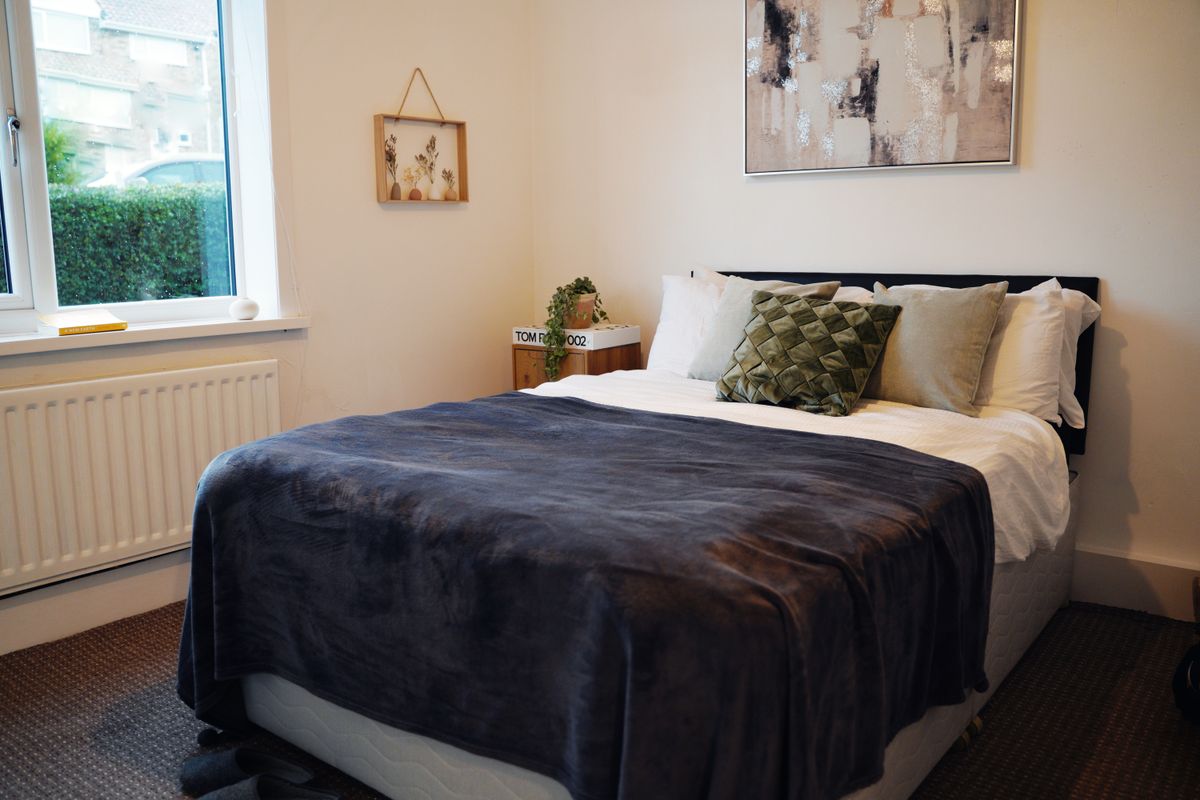
The throw, bedding, pictures and cabinet in the photo are separate decisions. You can change one of them, keep the rest or use something already owned. Their appearance does not establish a shopping total, a required pillow count or a measured effect on sleep.
For art, compare an existing photo or print, a licensed digital image printed locally, a poster, canvas, a textile or a small collection. Include image-use permission, print quality at the intended size, outer frame dimensions and suitable installation. Printing large does not automatically make an image good value, and a textile is not necessarily a single-hook job.
The bedroom wall guide compares eight formats. For a personalized place or star print, the Mapiful buyer guide covers proof and order checks; no current starting price, unique-to-one-buyer result or universal location/size availability is promised here.
For bedding, confirm mattress and cover measurements, what the set includes, how it feels to you and whether its care requirements fit your laundry facilities. You can keep good existing items and add a throw only if you want one. A matching set, natural fiber or higher price is not automatically the right choice.
Include Installation and Rental Commitments
Check ownership, agreed changes, wall construction, object weight and product instructions before pricing a fixing. Removable marketing language is not a lease or deposit guarantee. The rental guide adds the relevant planning: Plan agreed changes, product checks and a later move.
The US Command Picture Hanging Strips instructions exclude use over beds, on wallpaper and for valuable or irreplaceable items. Check the exact product's weight, surface, application and removal instructions; do not turn one rating into a promise for most prints, extra strips or every bedroom. These are not instructions for Enjoy The Wood's tape.
If adding lighting, include a compatible bulb and any required fitting help. Keep the actual product's instructions; the US Fire Administration electrical guidance advises keeping combustible materials away from lighting and avoiding damaged or pinched cord routes. Do not hide a cable under the rug to finish the picture.
Our one Luminous XL owner review records a 4-5-hour living-room installation, with the small islands taking the most patience. It is not a budget-bedroom makeover, removal test or evidence that a map should go over a bed. A larger assembly project deserves its own time and installation plan.
Before You Place an Order
- Write the exact issue, selected item and finished dimensions.
- Compare keeping, repairing or reusing before replacing.
- Record the actual complete cost, included parts, delivery, applicable taxes and fitting requirements.
- Check return conditions, especially for customized items, and the plan for storage or a later move.
- Make one manageable change and check whether it solved the issue before spending the rest.
For a tighter footprint, use twelve small-bedroom choices and a hypothetical bed-width example. For light, access and bedding rather than a shopping ranking, see practical bedroom planning. Decorations and color preferences are not sleep treatments.