
Start with Bedside and Dressing Access
Measure the full bed, doors, wardrobe and drawer openings. Try the arrangement with the room in use and note what is hard to reach. Keep useful furniture before choosing a replacement based on legs, a wood tone or a period label. The mid-century design guide covers the broader references; this page deals with the bedroom routine.
A pattern, a contemporary cover or a matching set can stay when it works. Compare bedding by fit, feel and care, not by a belief that a particular style or expensive natural fabric guarantees comfort or better sleep.
Four Palette Comparisons
- Existing bed and a pale wall
- Compare the frame and bedding with warm white, cooler white or grey samples. Keep the version you prefer in the actual room's light; no undertone is required by the furniture style.
- Wood or painted furniture
- Compare the finish on the bed, bedside unit and storage together. A dark or pale frame, painted dresser and mixed tones can remain. A reddish-brown appearance does not prove walnut or an object's age.
- One textile to try
- Bring a cushion, cover or fabric sample beside what you own. Mustard, blue, green, orange or a neutral are possibilities, not a compulsory accent-color list.
- Art as a color reference
- Try colors from a picture or poster in a small textile, then compare leaving the bedding plain. Several colors and a quiet neutral arrangement are both options.
Six Furniture Decisions
1. Keep or choose the bed for the person using it
Check frame condition, mattress compatibility and getting in and out, then measure the complete frame and any projecting headboard. A low platform, taller divan or upholstered bed can be considered. Visible tapered legs are a preference, not a requirement for support, access or comfort.
2. Compare the dresser with the dressing task
List what it needs to hold and check usable drawer dimensions. Test opening drawers with the bed and wardrobe in place. The CPSC's Anchor It! guidance addresses furniture tip-overs; follow the actual product's support and anchoring requirements rather than assuming a low outline is stable.
3. Add a reading chair only if it has a useful place
Mark the occupied chair and any ottoman, check getting up and the route to the bed, and give reading materials and light a reachable position. A similarly named designer-style chair is not proof of the original maker, construction or comfort. Keeping the space open may be the more useful choice.
4. Make the bedside surface reachable
Compare surface height and reach from the actual mattress. List the lamp, water, book, controls and necessities before choosing one drawer or an empty top. Matching tables are optional, as are different units on each side. Assess support and fixing for a shelf or wall-mounted unit.
5. Try the bench footprint before buying
Mark the complete seat at the foot of the bed, then check passing it, opening storage and using the bed. Select support, upholstery and care for the intended occupant. An extra bench is not required to finish the room.
6. Place the floor lamp around reading and movement
Check its entire base, shade and cord route beside the occupied chair. Try glare and switch reach. A tripod, arc lamp or another fitting can be compared; a sculptural form does not establish stability or a suitable position near bedding and curtains.
See the CPSC's Anchor It! campaign for furniture and TV tip-over guidance. This guide does not assess the support or fixing of a particular bedroom unit.
Photo Comparison: Keep the Frame, Try a Textile
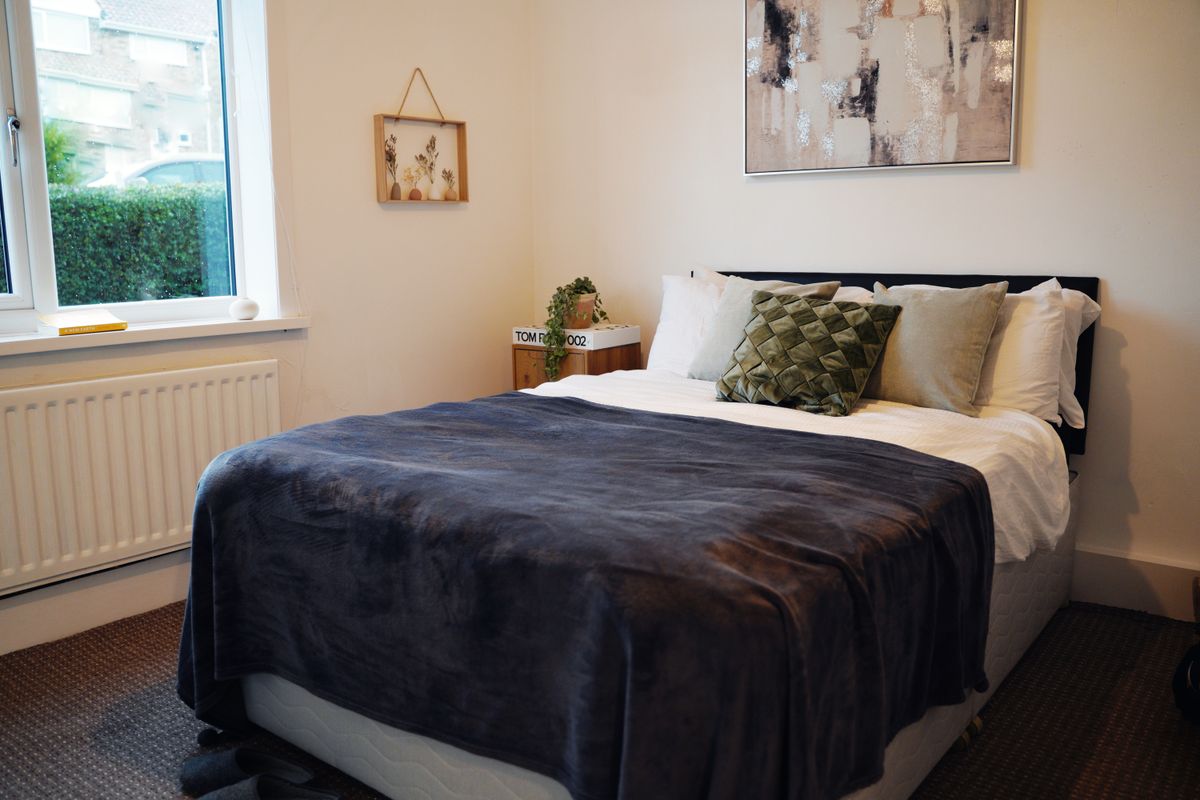
The dark frame and blue cover already contrast with the pale walls. Imagine placing a mustard, plain neutral or differently patterned sample beside that cover, then compare keeping the existing cushions. This is a sample exercise, not a before-and-after result or a reason to replace the bed with walnut. The picture cannot establish the route on both sides or the support of the wall art.
Five Lighting Comparisons
- Pendant or ceiling light
- Keep useful general visibility. Check the full fitting, support, output and occupied route before choosing a hanging position.
- Table lamp
- Compare shade glare and switch reach from the actual bed. Keep combustible fabric clear and follow the lamp's instructions.
- Floor lamp
- Check the base and cable as well as the light on the reading task. Do not let a large shade or base obstruct movement.
- Wall sconce
- Compare the actual position and controls with bedside use. Wall fixing, support and electrical compatibility need assessment; freeing a tabletop is not the whole installation.
- Light appearance
- Try it beside existing colors and for reading or dressing. A fixed Kelvin value is not a requirement of the style; keep a useful ceiling or task light.
The USFA electrical guidance covers combustible materials near lamps, suitable bulb ratings and damaged or pinched cords. Any electrical work needs the appropriate qualified installer. The lighting planning guide separates ambient, task and accent functions without prescribing a separate new fixture for each.
Three Wall-Art Directions to Compare
- Abstract or graphic work
- Compare the complete frame and colors with the bedding from the actual viewing position. A small piece or a group need not be replaced by one oversized work.
- Travel posters or personal photographs
- Choose a subject you want to see. Distinguish an old print from a modern reproduction and check the actual dimensions, framing and mounting.
- Botanical or other detailed images
- Keep a fine-line or decorative image if you enjoy it. The subject does not need to match the furniture's design date.
Try full-size outlines on an appropriate wall and check the piece's weight and fixing needs. Do not default to heavy or projecting work above the bed. The bedroom wall-art guide and gallery planner cover those decisions without treating one large piece as automatically better.
Six Checks Before Buying
- Keep useful furniture rather than replacing it to pass a period-style test.
- Compare actual dark, pale, painted or timber finishes together.
- Choose bed height and frame support around the occupant, not a low-bed rule.
- Retain the lighting needed for reading, dressing and movement.
- Keep or omit accents and matching pieces according to use and preference.
- Record the exact construction, full dimensions, delivery quote and configured-item return terms.
Our Homio buyer guide covers merchant information, not tested bedroom furniture or certified faithful reproductions. For other room tasks, see mid-century living-room planning and Japandi bedroom ideas. Sources and content checked November 16, 2026.