
Start With Bed Access and Dressing
List the items needed beside the bed, wardrobe and drawer opening, dressing space and window use. Our general Moroccan design guide names actual architectural and textile references and separates them from retail material claims. Here, compare a small project with the actual bedroom routine rather than treating a national style label as a specification.
- Teal, blue and terracotta
- Compare one textile sample beside existing bedding and furniture. This is an optional pairing, not the palette of every Marrakech home.
- Orange, ochre and pale colors
- Try a small picture or cover against a wall you retain. A color name alone does not identify a region or a craft tradition.
- Indigo, cream and a metal finish
- Keep the actual light you need and compare the objects together. Dark color does not guarantee intimacy or better rest.
- Rose, sage and sand colors
- Try a gentler contrast if you prefer it, including current white or cool-colored furniture. No compulsory national color formula is needed.
Photo Exercise: Compare the Bedside Surface and One Textile
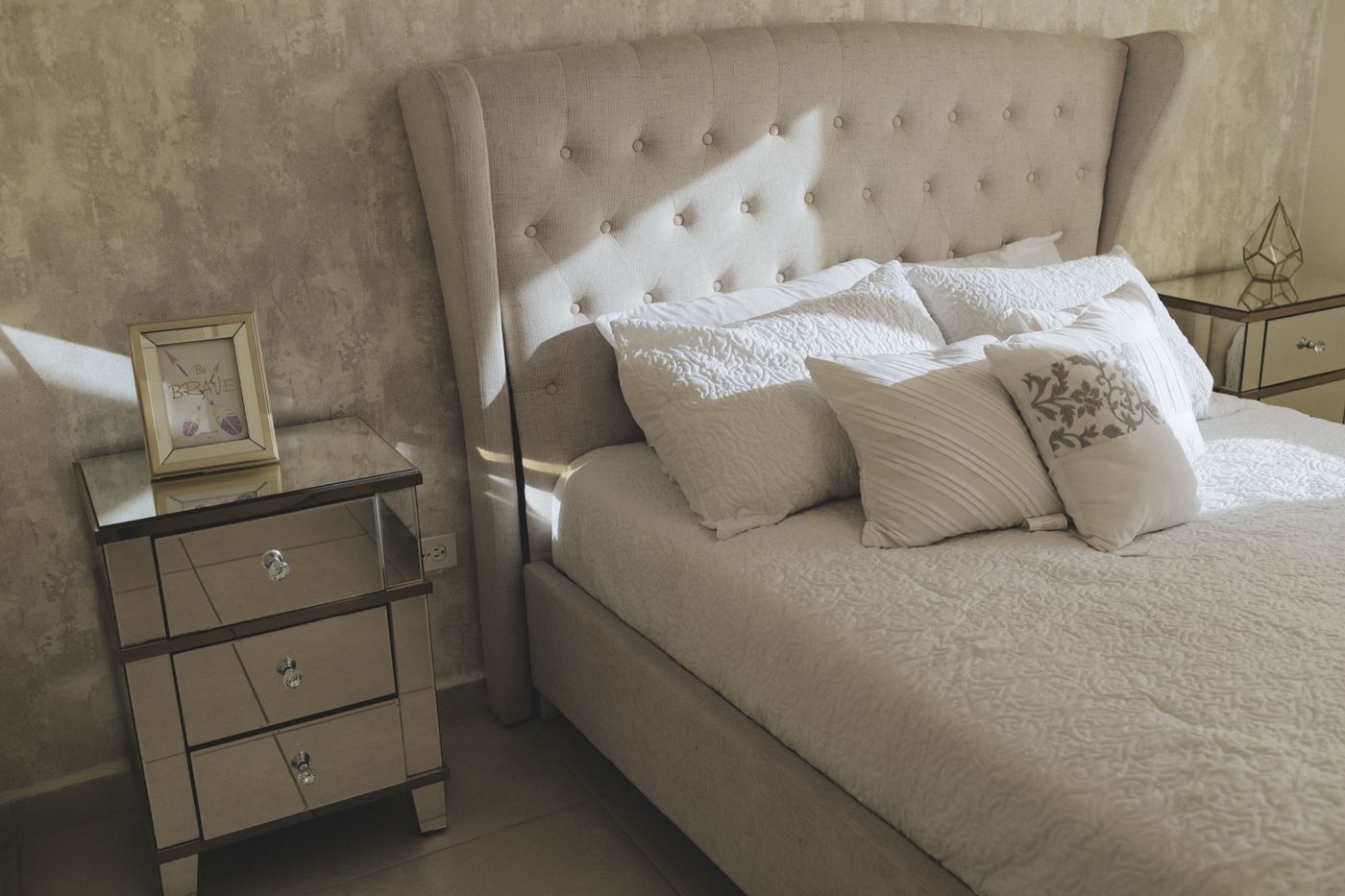
Imagine keeping the bed, pale walls and cabinet, then comparing one geometric cover sample. Leave the bedside surface useful for actual items and a suitable task light. The decorative object in the photo is not a recommendation to use a candle. The image does not establish the furniture's support, fitting, reach or material specification.
12 Projects for Textiles, Useful Light and Storage
1. Separate a tile reference from a floor or wet-area specification
A mosaic or printed geometric sample can be a visual reference. A bedroom wall, walking surface and ensuite shower have different construction and use requirements. Check the actual selected tile or system with the manufacturer and installer before ordering. A zellige-inspired label or familiar pattern is not enough to specify a floor, shower or headboard installation.
2. Choose a compatible lantern-form light
A perforated or colored-glass shade may create an effect you enjoy, but it depends on the actual fitting, bulb, lining and position. Check support, compatibility, useful light and switch reach rather than buying a cluster for the photograph. A 2200 K bulb is not compulsory. Keep the general light needed for moving, reading and dressing.
3. Try a patterned textile with bedding you use
Compare a teal, blue, burgundy or another cover beside existing bedding. Check the actual fabric, fastening, feel, cleaning and repeat size. You can stop with one pattern and retain a plain layer. Several covers or floor cushions are optional; neither a jewel tone nor a larger quantity of textiles proves better sleep or a more authentic room.
4. Choose personal art and its wall together
An architectural image, botanical subject, map or other picture can be a candidate. Choose something you want to see rather than rejecting imagery through a souvenir stereotype. Compare the complete frame, glass, weight and wall fixing. A facing or dressing wall may be a better project than making a large or heavy display directly over the bed.
5. Keep a usable bed and assess a headboard separately
A carved-looking headboard is not automatically cedar, hand-carved or a Moroccan object. Check provenance if relevant, plus support, fixing, weight and care. Do not use a loose divider as a bed-mounted panel merely because its pattern appeals to you. A plain upholstered or current bed can remain beside a patterned cover.
6. Use stable bedside furniture, not a decorative stack
Choose a table or cabinet intended to support the items you need, with suitable height and reach from bed. A metal tray can sit on suitable furniture if its use and stability allow; do not make its support from loose stacked books. Leave room for necessary equipment, water or reading rather than a prescribed tiny display.
7. Check a rug for the actual floor or display job
Ask about fibers, construction, condition, care and origin where relevant. A regional name or boucherouite label is not a weight or mounting specification. For a wall display, assess support and the textile's needs separately rather than using a large rug above the bed as an automatic headboard. On the floor, check edges and movement around the bed.
8. Compare a mirror without changing the architecture
An arched, round or rectangular mirror can provide a view you like. Check its full dimensions, glass, weight, support and the actual fixing; do not assume a loose leaning mirror is appropriate. An arch label is not proof of where the object was made; compare the actual outline and documented origin. Cutting a new doorway is a separate construction project, not a decor shortcut.
9. Test a wall color or finish sample
View a small sample beside retained bedding and furniture under the room's actual daylight and lamps. Keep white, gray or another useful color if you prefer. A plaster effect is a decorative description, not proof of a particular material, warmth or moisture performance. Confirm application and substrate rather than assuming any lookalike needs no specialist work.
10. Display objects without inventing their story
A vessel, box or photograph can be new, inherited or recently collected. Check condition, support and the space needed for dressing before adding a group. A market-like appearance is not evidence that an object was made in Morocco. Decorative ceramics are not automatically suitable for food, water, plants or a flame; choose the actual use and product first.
11. Add a pouf or floor cushion only for a useful place
Decide whether it will be a seat, footrest or decoration, and check the selected item's intended use and support. Leave room for getting out of bed, opening wardrobes and any equipment or help you need. Lower seating is optional, not a rule for an entire country's domestic life. Keeping the space clear is a complete choice.
12. Choose curtains for the actual window and light control
A patterned, embroidered or plain curtain can be considered. Compare finished dimensions, lining, care, opening and the route past the window. Test the selected product's light control rather than assuming heavy cotton or velvet blocks all light. Keep fabric clear of relevant heat sources and check the actual installation requirements.
The US Fire Administration's electrical guidance covers lamp wattage, combustible objects and pinched cords under rugs. Its candle guidance advises against lit candles in bedrooms and sleeping areas. No flame, fragrance or improvised fitting is required for a decorating effect.
Choose Art for the Available Space
Compare the image, full frame size and mounting requirements in your own room rather than relying on a retailer-style label. Choose wall art for the available space and compare the bedroom wall-display options before buying. A subject can be meaningful without a claim of historic authenticity.
If you want the outline of a place or a personal date, the Mapiful guide covers preview, format, framing and custom-order terms. A current print is not a period original or a certificate of suitability above the bed. You can also reuse an existing picture on a facing or dressing wall.
Five Checks Before Starting
- Keep a practical bedside. Check reach, table support and necessary items from bed. A tray, scented object or decorative light should not displace what you use.
- Treat the pattern as a reference. Ask about actual provenance and construction where it matters. Neither a matching collection nor a manufactured alternative is automatically wrong.
- Keep useful light and plain surfaces. A ceiling light and plain white ceiling can remain. You do not need projected stars, a dark room or a rigid color count.
- Separate hanging from appearance. Confirm the actual wall, complete load and suitable fitting for each picture, mirror or textile. A style photo is not that assessment.
- Start with one bounded change. Compare a cover or small picture before ordering tiles, furniture or a whole set of fixtures. Include care, installation, delivery and any return restrictions.
For conversation seating and a different display task, see the living room guide. A practical bedroom does not need that room's quantity of objects, layout or lighting arrangement.