
Try the Bedside and Dressing Routine First
Sit on the bed, reach the light, open clothing storage and operate the window covering. Record one thing that needs improvement and the pieces you will keep. Use the rustic material and salvage guide for the difference between an aged appearance and documented indoor suitability.
For another approach, compare farmhouse bedroom projects and wabi-sabi bedroom decisions. The living-room guide instead addresses seating, display and the occupied sofa.
Four Palette Comparisons
- Wood and cream
- Compare a cream fabric beside your existing bed and floor. A wood-look or painted frame can remain.
- Green and earth
- Try a green sample with brown or neutral details without treating it as a sleep or calming intervention.
- Charcoal and timber
- Keep a dark frame or cover you like and compare a lighter textile. Dark stain is not automatically dated.
- Terracotta and stone
- Compare a clay-colored detail with the actual wall and floor. Cool gray and white surfaces are not excluded.
Twelve Bedroom Ideas
1. Keep a supportive bed before changing its appearance
Try getting in and out, mattress compatibility, support and the occupied route. A timber, iron, upholstered or manufactured frame can work with a textured room. Flat-pack construction or a smooth new finish does not by itself establish poor quality.
2. Compare a headboard without using unknown salvage
A freestanding or properly supported headboard is different from planks fixed to a wall. Check exact dimensions, support, surface condition and known treatment history. Do not use old railway ties or unassessed boards near bedding; choose a documented indoor product rather than a sanding or sealing shortcut.
3. Layer bedding only as much as you use
Handle the fabric and read its fiber content, washing instructions and complete product specification. Keep the sheets and covers that suit you, including suitable synthetic fabrics. Compare one throw or cushion before adding a heavy wool layer; natural linen is not a requirement or a guarantee of better sleep.
4. Try a wall sample before adding stone or rough plaster
A smooth painted wall can frame a textured headboard or picture. For cladding or coatings, assess the substrate, condition, buildup, cleaning, fixing and any permissions. Do not expose old surfaces or disturb unknown paint merely to create an aged background.
5. Keep a floor that supports ordinary use
Walk the bed-to-door and dressing routes with the usual furniture in place. Compare a rug's actual backing, edges, maintenance and movement before layering. Stone, wood, carpet and manufactured surfaces can remain; a floor does not need to look generations old.
6. Choose metal details for their job
Try the drawer pull, curtain control or lamp switch before matching finishes. Retain suitable chrome, steel, brass or dark metal hardware. A handmade-looking surface cannot establish condition, support or electrical suitability.
7. Choose personal art and its location separately
A photograph, print, textile or wood piece may provide the landscape reference. Check its full dimensions, weight and correct fixing for the actual wall. A heavy object above the bed is not the default: compare another wall, and get appropriate advice if support or placement is uncertain.
8. Treat wall paneling as an optional fitted project
Compare a sample with the bed and existing wall before choosing shiplap or tongue-and-groove. Include edges, sockets, cleaning, permissions and appropriate fixing in the plan. A painted surface can remain; room texture can come from a smaller textile instead.
9. Make the bedside light reachable
Try the light from the occupied bed and check the switch, glare, cord route and clearance from bedding or curtains. Keep useful general and dressing light. A fixed Kelvin value, dimmer or overhead-light ban is not a style requirement; electrical modifications need qualified advice.
10. Choose curtains for privacy and light control
Operate the window and covering with furniture in place. Compare lining, actual fabric, cleaning, support and the light you want to block or admit. Roller blinds, blackout coverings and suitable synthetics are options; heavy linen is not the only way to fit the room.
11. Put display objects outside the useful bedside area
First leave space for the items and equipment you actually need. Put stable ceramics or personal objects elsewhere if they displace those items. A found branch is not a structural shelf bracket, and a purchased ornament is not less meaningful than a foraged one.
12. Use storage that fits the daily routine
Open drawers and wardrobe doors, try dressing and keep necessary equipment accessible. Closed storage, matching furniture and a larger personal collection can remain. Choose a realistic amount of display rather than enforcing one book, one lamp or one object.
A Textile Trial Without Replacing the Bed
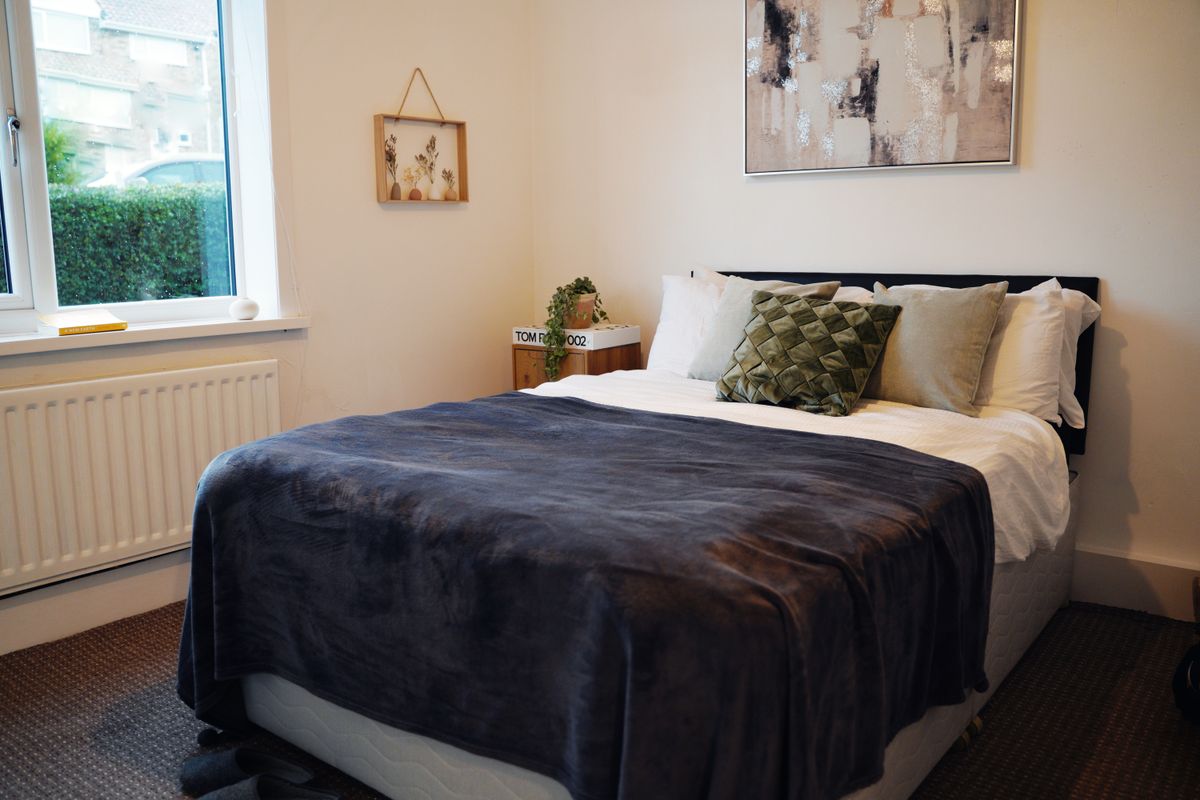
The picture combines a dark frame, blue cover and several lighter textures. Imagine retaining those pieces and comparing one woven, plain or differently patterned sample beside the cover. The bed does not need to become reclaimed oak for the fabric comparison to be useful. This is not a before-and-after or a fiber identification from a photograph.
- Keep the frame, mattress and usual bedding while comparing the sample.
- Handle it and read its actual care requirements rather than guessing from texture.
- Try the normal bedside and dressing routine, including where spare bedding will go.
- Keep or return the sample before committing to a headboard, paneling or new furniture.
Five Checks Before Ordering
- Check support, mattress compatibility and occupied access before the frame's appearance.
- Confirm indoor material history instead of bringing unknown salvage beside bedding.
- Keep useful coverings, storage and necessary equipment without natural-only or object-count rules.
- Choose art and its mounting location separately; do not default to a heavy object above the bed.
- Check the complete product, installation needs, delivered cost and returns for your destination.
USFA electrical guidance covers keeping combustible material away from lamps, matching bulb ratings and avoiding damaged or pinched cords. Apply the exact fitting's instructions and qualified advice where needed, not a copied photograph. For a different art placement, see bedroom wall-art choices. Sources checked November 16, 2026.