
Decide What Stays Before Choosing a Farmhouse Look
List the floor, cabinets, sofa and larger furniture you are keeping. Look for a connection between them: a warm wood tone, painted finish or simple shape. You can build around an existing dark table just as deliberately as a pale oak one.
Traditional farmhouse styling might emphasize painted furniture, a substantial table and patterned textiles. A modern version might use plainer cabinet fronts, fewer objects and stronger dark accents. A more rustic version can make wood grain and rougher-looking surfaces the focus. These are useful directions, not strict categories.
For a room with honey-toned flooring, try warm white and muted green samples beside the actual floor. With a dark table, consider lighter chairs or a plain rug to change the balance. There is no universal paint percentage or requirement that all wood finishes match.
- White, cream and wood
- Compare the white or cream you keep with the actual floor and furniture. A dark metal detail is one possible contrast, not a compulsory finish.
- Warm neutrals and brass
- Try oat or greige beside honey-toned wood and an existing brass fitting. Check the samples together rather than replacing every metal to match.
- Muted green, blue or rust
- Compare sage, dusty blue or a rust-colored textile with plain bedding or upholstery. Plaid, ticking stripe and a plain fabric are alternatives, without a required accent count.
- Gray, charcoal and darker wood
- Keep a gray wall, slate tone or dark frame if it works for you. Compare a pale fabric or patterned cover in the light you actually use; cool tones and dark stain are not excluded.
Choose Materials for Their Job, Not Just Their Story
Wood furniture
Compare construction, condition, dimensions and finish. Reclaimed does not automatically mean stronger, safer or lower-maintenance. Check for a stable, usable surface rather than buying damage as evidence of authenticity.
Painted pieces
An existing dresser or cabinet can be the calmer partner to a textured table. Restoration or stripping old coatings needs a separate, material-specific assessment; this guide is not an instruction to sand an unknown finish.
Linen, cotton and other upholstery
Choose for feel, cleaning and your household. A natural-fiber label alone does not establish washability or durability. A practical synthetic or blended fabric does not make an otherwise useful room invalid.
Metal, ceramic and stone accents
Repeat a finish where it helps the room feel connected. Black is one option, not the only acceptable hardware color. Existing stainless appliances and chrome fittings can stay.
Before adding paneling, beams or a sliding door, account for installation, trim, sockets, clearance and maintenance. Decorative changes should not be presented as simple substitutes for structural work or a properly functioning door.
A Different Starting Point for Each Room
Kitchen: protect the work surface
A painted cabinet, useful board or washable towel can introduce the direction without replacing the kitchen. Open shelves are optional: consider dust, reach and what needs concealed storage. Compare more options in farmhouse kitchen ideas.
Living room: comfort before the focal wall
Keep enough room to sit, pass through and use side tables. Try a textured throw, plain curtains or one artwork before adding a feature wall. A room does not need a fireplace or an oversized sofa to qualify. Start with the six living-room projects below.
Bedroom: simplify the layers
An existing wood or painted bed, bedding chosen for comfort and one contrasting texture may be enough. Keep bedside storage accessible and plan light control for sleep. Compare the six bedroom projects below.
Dining room: measure with the chairs in use
Check the table footprint, chair pull-out space and access to storage. Mixed chairs or a bench can work, but compare seat heights and comfort rather than buying a mismatched set for appearance alone.
Six Farmhouse Living Room Projects
1. Compare a paneled wall before changing the ceiling
Shiplap, tongue-and-groove or a plain painted wall can provide a background for the furniture you keep. Try a sample with the actual skirting, sockets and art. Existing or decorative beams are a different project: assess support, services, fixing and permissions rather than exposing a ceiling or adding overhead weight for authenticity.
2. Try the sofa and coffee table together
Sit, reach the tabletop and get up with other seats occupied. A slipcover may be useful if its actual care and fit suit the household; a dark, formal, synthetic or neatly upholstered sofa can stay too. Compare any reclaimed table for known history, stable support, usable edges and cleaning, not just knots or age.
3. Test one pattern or textile at a time
Plaid, ticking stripe, a plain woven cover or a knitted throw can add contrast. Keep a photograph of the existing arrangement and compare one sample before buying the rest. Layered rugs are optional: walk the route and check edges, movement, backing and care. There is no rule that both rugs or all seating must be covered.
4. Give lighting and a fireplace separate jobs
Light the seat, table and passing route before choosing a decorative fitting. Black metal can repeat, but working brass or chrome fittings need not be replaced. A fireplace is optional, not the necessary heart of the room. New appliances, surrounds or mantels need their own assessment; do not put combustible art, baskets or greenery near heat to copy a styled picture.
5. Use baskets, shelves and vintage objects for a particular purpose
List the throws, books or other items you need to store, then compare open shelves with a cupboard. Check loaded weight, fixing, condition and cleaning. Wicker is not maintenance-free; neither a galvanised container nor an old ladder is automatically suitable as a planter or rack. Personal word signs and matching objects may remain without odd-number or authentic-age quotas.
6. Choose curtains and any greenery for the actual room
Operate the window covering with the furniture in place and compare privacy, lining, cleaning and support. Full-length linen is one option, not a ban on pleats or blinds. If adding a plant or dried stems, check the species, room conditions, household suitability and stable placement away from lights and heat. Artificial greenery, a landscape image or none is a choice.
For a broader textile comparison see boho living rooms; for pronounced grain and stone, compare rustic living-room choices. The labels are references, not different standards for how real a home must look.
Six Farmhouse Bedroom Projects
1. Keep a supportive bed and assess any paneling separately
Try mattress compatibility, getting in and out, and the occupied routes before changing the frame. A wood, iron, painted or upholstered bed can stay. A plank headboard or paneled wall requires known indoor-suitable material and appropriate fixing, not unknown barn boards attached beside bedding. The existing plain wall can frame a textile instead.
2. Choose bedding and a rug for touch and ordinary care
Compare the covers you actually use before adding a linen duvet, cotton quilt, check throw or another pillow. Read the actual fiber, washing and backing specifications. Natural fabric, an old-looking rug or a fixed number of cushions does not guarantee comfort; a suitable new or synthetic option is not a style failure.
3. Check a barn door as a complete door system
A sliding door is not automatically a small-room solution. Record the clear opening, required wall run, track and stops, handles, privacy, operating force and anything it would cover, including switches or storage. Ask the supplier and appropriate installer about the actual system and room. Keep a functioning hinged door if it works better; this is not a mounting tutorial.
4. Plan bedside surfaces and lights together
A wall light does not replace the place needed for a drink, phone, book or necessary equipment. Compare a table, cabinet or suitably supported shelf from the occupied bed. Check reach, loaded weight, cords and clearance from fabrics. Buy a complete suitable fitting rather than turning a jar into a homemade electrical light.
5. Keep the window and ceiling useful
Compare curtains, lining or blinds for privacy and the light control you need. Ceiling-height unlined linen is not the only option. Any beam, canopy rail or overhead drape needs appropriate assessment and fixing; do not hang fabric from an unassessed beam above the bed or near a light.
6. Inspect a vintage piece before adding it to the route
A trunk, mirror or ladder may be interesting, but check stability, condition, usable edges and placement first. Include any needed specialist assessment, delivery and repair in the cost. Matching bedside furniture, mixed metal finishes and new objects can remain. A genuinely old object is not an admission ticket to the style.
The cottagecore guide offers another direction for personal pattern and objects. For art, use bedroom wall-decor planning rather than assuming a heavy wooden work belongs above the bed.
Useful Wood Accessories, Not a Wall-Art Recommendation

Forest Decor's current catalog focuses on personalized cutting boards, charcuterie boards and gift boxes. Those are relevant if you need a kitchen item or gift, not as a source of framed botanical posters. Our Forest Decor buyer page covers that actual product category.
If an item will touch food, confirm the exact product's intended use, finish and care instructions. A board bought as a decorative gift is not automatically appropriate for every preparation task. Include engraving, delivery and any accessories in the comparison.
Choose the Wall Subject Before the Shopping Category
A landscape, family photograph, botanical artwork, mirror or collection of meaningful objects can all work. Choose one main arrangement and size it for the wall and furniture below. If you enjoy a word sign or mason-jar display, you do not need to discard it because a trend list says it is dated.
A wooden map is an option for someone who wants geography, not a mandatory farmhouse accessory. Our wooden wall art comparison distinguishes maps, carved panels, veneer and other formats. For our actual map, use the Luminous XL owner review, not assumptions about rustic wood or hand carving.
Use the sofa measuring guide for a worked layout. For a bedroom or dining area, adapt the plan to the furniture, sightlines and fixing requirements instead of copying a sofa rule unchanged.
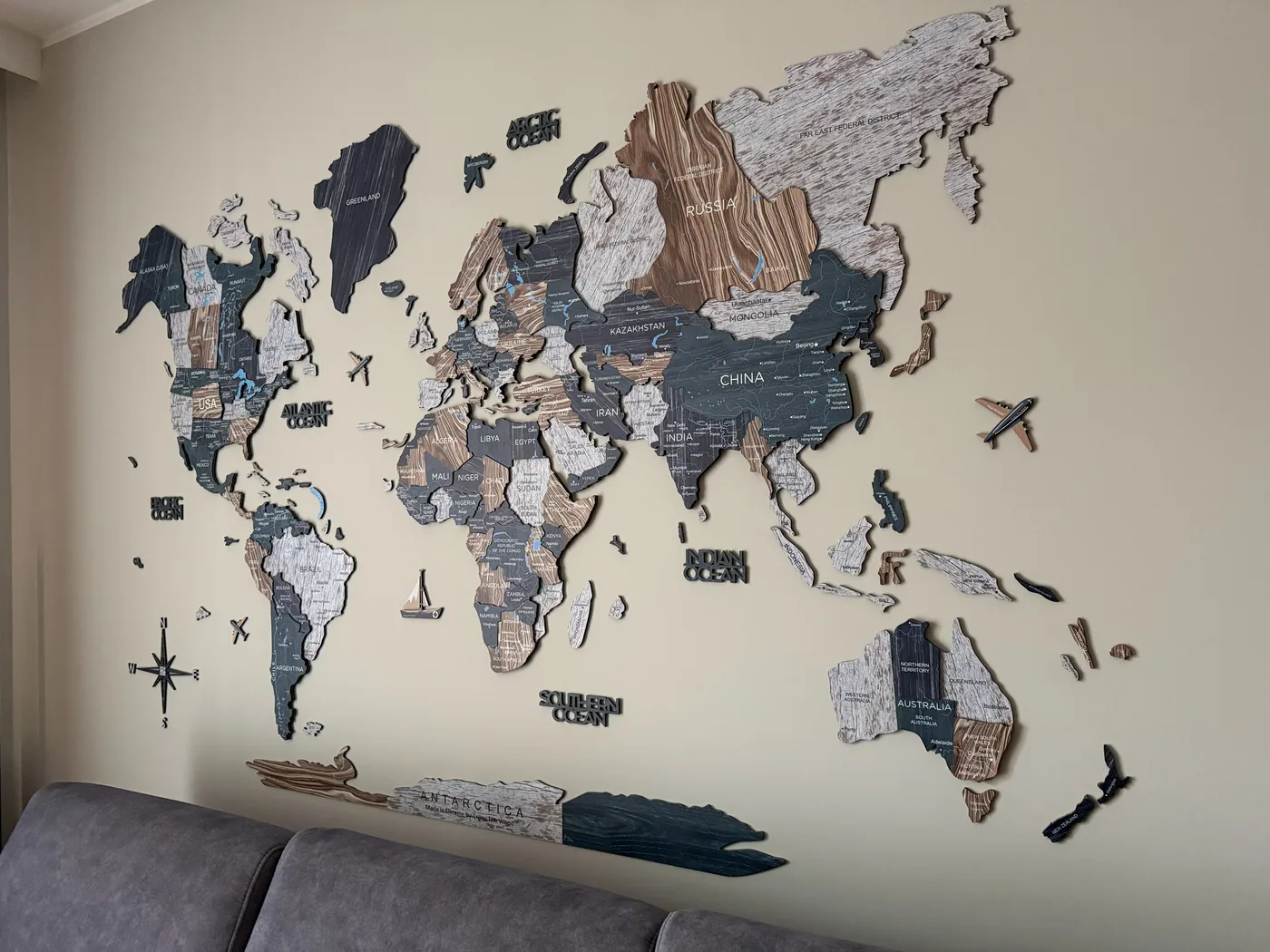
We own one XL 3D Luminous Colored Wooden World Map. Installation took 4-5 hours, positioning the small islands took the most patience, and the supplied kit had everything we needed. Its visible projection can be compared with a flat framed image; it does not establish hand carving, wood species, removal performance or better art quality. The ETW code page records a separate November 7 checkout, not a live saving for every order. US and international buyers need their actual configuration, destination and delivered total.
Keep the First Project Small Enough to Evaluate
Choose one useful improvement: better lighting at a seat, a more practical table arrangement or a correctly sized wall piece. Record the complete cost and what it replaces. After using the room, decide whether another texture or color is actually missing.
If you prefer more pronounced material texture, compare rustic design. If you want a lighter, simpler arrangement, the Scandinavian guide offers a different brief. Keep the decisions that work for your home rather than buying every marker of either style.
For a possible living-room textile change, record the retained sofa and table, the one sample to compare, its care and the actual price. Use the seat and route before deciding to keep or return it. This is a planning exercise, not a makeover or product test we have carried out.
Before disturbing old paint, read EPA's pre-1978 US home guidance; it explains lead-dust risks and recommends lead-safe certified contractors. Unknown coatings need assessment, not automatic sanding. The USFA heating guidance covers combustible items and professional maintenance, while its electrical guidance addresses bulb ratings, lamp separation and damaged cords. These sources do not constitute structural, fixing or electrical instructions for your room. Sources checked November 16, 2026.