
Start With the Seats You Actually Occupy
Mark the conversation seats, screen view, reading position and route through the room. Check tables and lamps from those seats, then choose one area for a print or collection. Our general grandmillennial guide covers the name, textile history and pattern-sampling method; this guide applies choices to sitting, serving and storage.
- Rose and cream
- Try a floral sample containing rose and green beside an existing pale wall or brown cabinet. It does not require an antique-oak furniture set.
- Duck egg and white
- Compare a blue cover, white background and the metal finishes you already have. A cool blue or plain white is not disqualified.
- Terracotta and garden green
- Use a plant, ceramic or textile as a small color reference. Keep a useful neutral sofa rather than changing every large surface.
- Lilac and gold
- Compare lilac with a frame or lamp finish in the room. This is an optional color pairing, not a gendered or formal-room rule.
Photo Exercise: Keep the Sofa and Picture
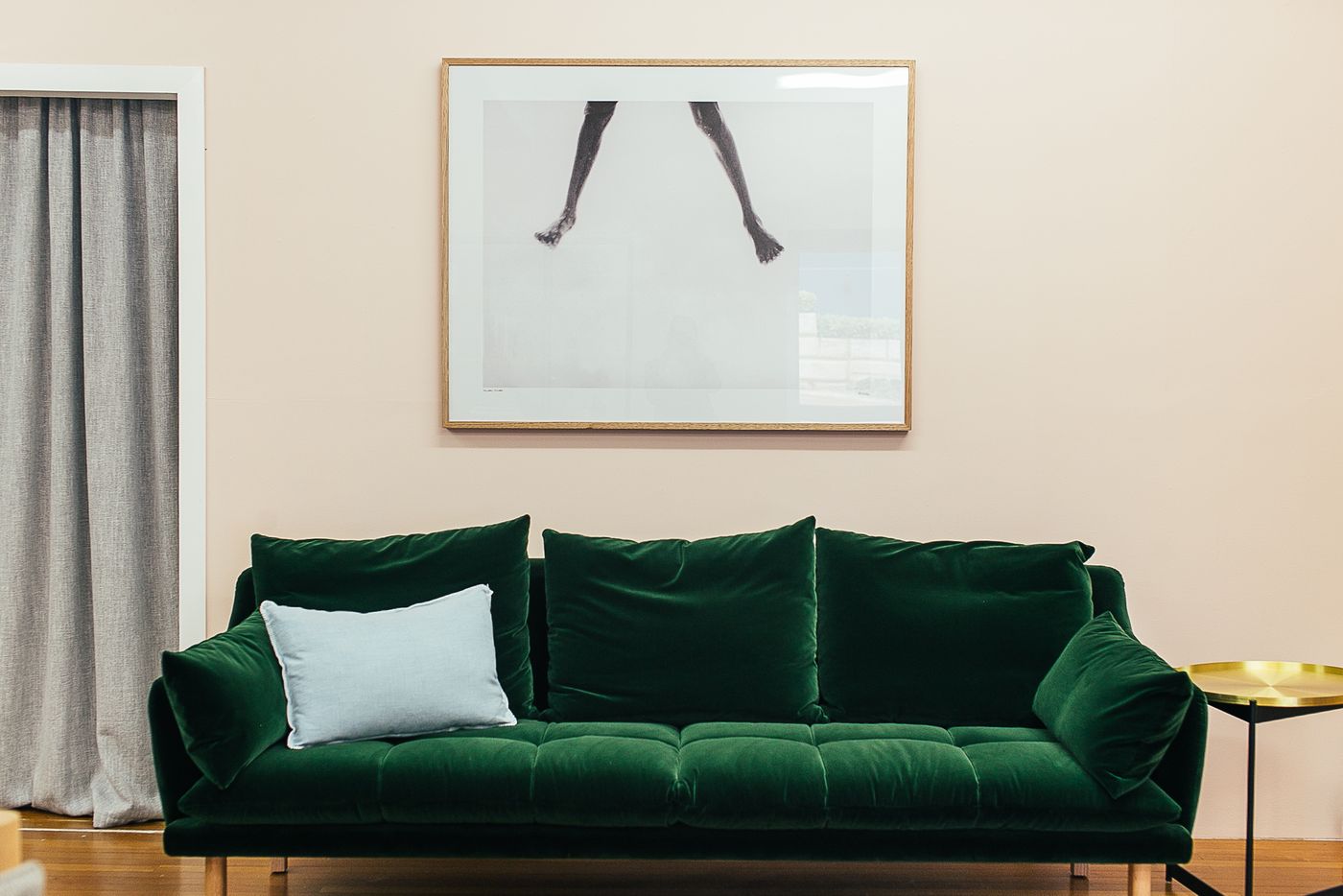
Imagine retaining the green sofa, plain curtains and existing picture, then trying one patterned cushion cover beside them. Compare it from the occupied seat and doorway. The photograph provides a starting arrangement, not measurements, a comfort test or proof that this sofa needs replacing. A contemporary picture can remain part of a personally collected room.
12 Projects for Seating, Textiles and Display
1. Keep the sofa, then compare a floral textile
A rolled-arm, camelback or buttoned sofa can provide a traditional outline, but a track-arm sofa can also stay. Sit, rise and reach the side table before judging the picture. If you want a print, try a removable cushion cover first; check its composition, cleaning and the actual repeat. Reupholstery is a separate cost and condition decision, not the entry requirement for the style.
2. Test a wall color beside retained furniture
Duck egg, sage, terracotta and cream are possible starting points, not a ranked list of correct colors. View a sample with your floor, sofa and pictures in daylight and under the lamps you use. You can keep white or gray paint and introduce pattern elsewhere. Paneling and wallpaper are options, not necessary architectural changes.
3. Compare two patterns before adding a third
Put one existing patterned rug or cover beside a proposed stripe, floral or plain textile. Look at repeat size, background and contrast from the doorway and an occupied seat. Sharing a color or varying scale can help you compare, but there is no fixed three-pattern formula. Leave a surface plain if that is the combination you prefer.
4. Mix furniture by job, dimensions and condition
An older side table, cabinet or chair can sit beside a current coffee table. Check the height and reach from the occupied sofa, space to move, condition and any needed repairs. Genuine age is optional, and a seller's antique or period label is not evidence of origin. Include transport, access, repair and restraint requirements in the complete cost.
5. Choose curtains for the actual window and room
A floral, stripe or plain curtain can all work. Compare a large enough sample to see the repeat and ask about finished width, lining, heading, care and pattern placement. Check opening, radiators or other heat sources and the route past the window. Full-height curtains or a pelmet are choices; fabric does not need to pool on the floor to be decorative.
6. Plan a personal group of pictures
Start with family photographs, botanical illustrations, landscapes or other pictures you already want to see. Measure outside frame dimensions and sketch the whole group before choosing fixings. Mixed or matching frames are both possible. A single picture can be enough; you do not need to purchase a collection or imitate the appearance of decades of collecting.
7. Try a contrasting chair where you will use it
A patterned or solid chair can add a different outline near the sofa, but first choose its purpose: reading, conversation or an extra seat. Check the actual position, seat and arm height, table reach and moving space. A wingback, tub chair or current design is an option, not proof of comfort. Do not add an unused chair solely to satisfy a style checklist.
8. Give collections supported, reachable storage
China, books, photographs and small boxes can share shelves without covering every gap. Check shelf capacity and mounting for the actual objects, leave lifting and cleaning room and keep everyday items accessible. A tall cabinet or bookcase needs appropriate restraint. A collection may be recently started; its display does not have to pretend everything was inherited.
9. Choose a rug around movement as well as pattern
A floral or Persian-style design can be a starting point, including a new rug. Check the actual dimensions with the seating, doors, chair legs and route through the room. A worn or old appearance is not inherently better condition or value. A plain rug can remain useful beneath patterned covers; do not run electrical cords under it.
10. Use trim where its detail and care suit you
Piping on a cushion, a pleated cover or a trimmed curtain edge can be a small project. Compare cleaning, snagging and how a removable cover will fit. A factory-made detail can be enjoyable without being presented as handwork. Do not attach loose cloth, paper or fringe to a working lamp shade as a decorating shortcut.
11. Place lamps for actual reading and conversation
A matching pair of table lamps can create symmetry, but unequal tables or one task lamp can be more useful. Try switch reach from the seat and check where light falls on a book and screen. Use a compatible shade and bulb, follow the fitting's wattage limits and keep combustible objects away. A pleated or ruffled shade is not automatically the right size or fitting.
12. Treat a mantel as an optional display, not the room's duty
If you have a fireplace, follow the actual appliance and installation requirements before putting art, plants or collected objects nearby. Do not copy a photograph as a clearance guide. A supported shelf or cabinet elsewhere can display the same collection if there is no suitable mantel. Keep the display separate from any working heat source and leave room for its operation and care.
For a display cabinet or bookcase, follow the selected unit's instructions and appropriate fixing requirements. CPSC's Anchor It campaign addresses furniture and television tip-over prevention. The US Fire Administration's electrical guidance covers bulb wattage, combustible objects near lamps and cords under rugs. Those are practical requirements, not evidence that a style or pictured arrangement has been certified.
Separate a Design Choice From a Product Claim
For new seating, our Homio Decor buyer guide covers selected specifications, made-to-order terms and delivery questions. We have not tested its chairs here. A traditional outline does not establish handcraft, materials, provenance or comfort; check the actual item and complete delivered cost.
For the walls, plan the complete picture group and fixings before ordering frames. A personal place can be a subject for a current print; the Mapiful guide explains preview, format and custom-order checks. If you prefer a dimensional map, our actual XL map review is a separate owner account, not proof that a map belongs in every grandmillennial room.
Five Checks Before Adding More
- Keep the furniture that works. Traditional and current pieces can coexist. Decide what problem a replacement would solve before ordering it.
- Let samples, not palette bans, decide. Bright, cool, pale or darker colors can stay. Compare the actual group rather than requiring everything to look faded.
- Leave usable space. A display can stop short of every surface. Keep seating, serving, storage, doors and the route through the room practical.
- Price the whole project. Include samples, fabric allowance, framing, fixing, delivery, repairs and any return restrictions, not just a promotional item price.
- Try one change before the next. Use a cover, small picture group or rearranged shelf for a while. You can stop there without changing the rest of the house.
For a different room task, see bedside, bedding and dressing choices. Keep the living room brief focused on the people, objects and routines it actually serves.