
One Patterned Zone Can Be the Project
A patterned bed beside plain walls, a dense picture group with ordinary bedding or a cool-colored room with several collections are valid starting briefs. The room does not need to go all in across every wall. Nor must the headboard be the first thing everyone notices or the most expensive item you own.
The general pattern-and-collection guide keeps shared color and gallery comparisons in one place. The eclectic bedroom projects and grandmillennial bedroom guide offer neighboring references, not different levels of taste or commitment.
Four Bedroom Palette Comparisons
- Jewel colors with an existing neutral
- Compare a teal, burgundy or blue textile with your bed, floor and wall. A small accent and a larger patterned surface are different proposals; the room does not need every surface equally saturated.
- Botanical color with plain bedding
- Take a leaf or flower color from a pattern and compare it with the cover you already use. A printed botanical subject can be enough; buying the live plant shown in a catalog is a separate care decision.
- A cool direction or a warm/cool mixture
- Try blue, lavender, green or a retained chrome fitting alongside the actual textile sample. A cool color does not invalidate the room. Compare the combination in your light rather than forcing every finish into a supposedly warm family.
- Pale background with a dense repeat
- Keep white, gray, cream or another existing wall and use a floral, stripe or collected picture group for detail. A plain wall, matching pair of tables or one patterned zone can remain part of a maximalist brief.
Twelve Maximalist Bedroom Projects
Choose the job you actually want to change. These are options to compare with your room, not twelve purchases needed to complete it.
1. Compare the wall and ceiling separately
Try a paint sample with the existing bed and a wallpaper sample if you want a repeat. All-over color, one wall and the original background are alternatives. Look from the bed and doorway before extending color onto the ceiling. A dark enclosure is not a tested way to improve sleep or a requirement for a personal room.
2. Choose a headboard for the bed you actually use
Compare the full height and width, the supporting bed frame, attachment, nearby sockets and access to storage. An upholstered or patterned headboard can be one project, but a plain existing frame can stay. Check fabric composition, construction, care and delivery; an oversized or expensive piece is not automatically a better purchase.
3. Try the amount of pattern you want on the bed
Put a real fabric sample beside your current bedding and look at the motif at the size of the intended cover. A duvet, one cushion or a throw are different amounts of pattern. Keep enough space and suitable bedding for ordinary use; extra pillows, luxury fibers and several scales of print are optional.
4. Plan pictures without automatically loading the bed wall
Try the complete framed group above a dresser or on a facing wall as well as considering the headboard wall. Include frame and object weight, fixing, lights and normal movement. A dense floor-to-ceiling arrangement, mirror or plate above the bed is not a compulsory maximalist feature.
5. Test whether a chair has an actual job
Mark the complete occupied chair footprint and check dressing, reading, wardrobe access and movement around the bed. Keep a chair you already use or omit the extra seat. An unusual silhouette, velvet cover or named designer reference does not establish comfort, material quality or fit.
6. Compare wallpaper repeat at its intended location
Ask for the actual repeat, sample and product instructions. Try it beside the headboard, bedding and retained wall rather than judging only a small online swatch. One panel, one wall or more coverage are options. Do not assume a digital image or historical textile supplies the measurements for a current wallpaper.
7. Compare one rug, layered rugs and the current floor
Include opening doors and drawers, normal bed access, edges, movement and cleaning. A second rug can add a different pattern, but it is not essential for richness. Read the selected item's material and care information instead of buying by an assumed regional or handmade origin.
8. Choose bedside lamps that work from the bed
Try the switch, glare, usable table surface and the specified fitting and bulb. Matching lamps, different lamps and a suitable existing light are alternatives. A sculptural base or pleated shade can add detail, but appearance does not settle electrical condition, stability or clearance from bedding.
9. Give collections storage as well as display space
Choose which books, photographs or objects you want visible, then keep ordinary bedside surfaces and loaded storage accessible. A group can rotate between display and storage. Functional equipment and items kept for sentimental reasons do not need hiding or a curation story to count as part of the room.
10. Keep curtains useful for privacy and light control
Compare the full fabric sample and finished curtain arrangement, including opening, cleaning and nearby heat or lamps. Plain, patterned, blackout or other suitable coverings can stay. Floor pooling, heavy velvet, a decorative pelmet and ornate poles are choices, not requirements.
11. Choose a botanical location, or a botanical image
Check the selected plant's growing needs against the actual light, space and care you can provide. A large plant is not interchangeable with every other large plant, and there is no required count. Include pot, drainage arrangement and the surface below it; a floral textile can supply the subject instead.
12. Keep useful light for the whole routine
Try reading, dressing, storage and switches from the positions you use. Warm or dim settings may suit some moments, but needed brightness and a suitable overhead light do not make the room wrong. Follow the actual fixture and bulb instructions; this is not an electrical plan or a test of lighting as a sleep treatment.
Use the bedroom wall-placement guide and full gallery plan to compare a group, a single picture and the option to leave the bed wall unchanged.
Look at the Repeat, Not a Required Maximalist Color
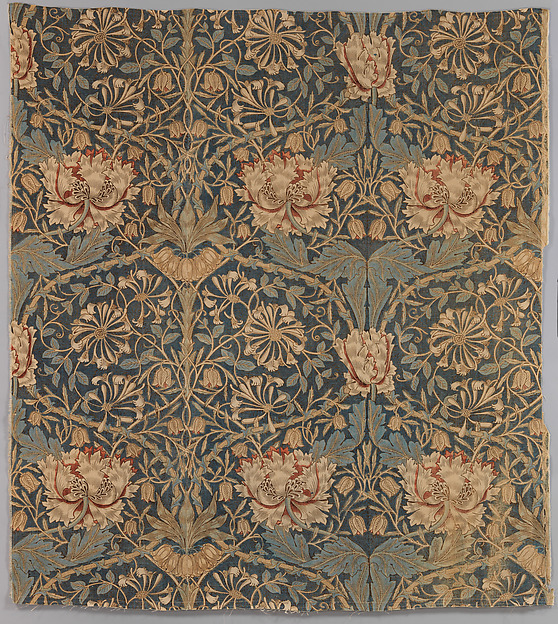
Light flower shapes, fine stems and a darker field repeat across this particular textile. Compare those three features separately: the size of a flower, the density of the connecting lines and the amount of background that remains visible. A pattern can provide detail without every other surface carrying an equally dense motif.
The museum record identifies this specific object and its dates. It does not make maximalism a nineteenth-century bedroom formula, prove the provenance of a current Morris-style listing or provide its repeat dimensions. Compare an actual candidate sample and product information before choosing a modern cover, curtain or wall covering.
Three Ways to Use a Floral Reference
- One patterned cover with the current bedding
- Compare a real candidate sample beside the duvet and headboard. Check how much of its motif appears on the chosen cover and how it will be washed. The plain version remains an alternative.
- A larger textile surface
- Compare the actual repeat and the visible area of a curtain or bedding item. Ask about pattern direction and the selected product's details before ordering. Do not infer a repeat size or modern textile suitability from the museum photograph.
- A picture rather than another textile
- A personal drawing, photograph or suitable print can add a botanical subject while keeping the existing bedding. Plan the outer frame and complete group, then compare locations. There is no need to buy both a print and matching fabric.
A Four-Step Bedside Pattern Trial
This is a hypothetical sample-and-use exercise, not a makeover or sleep study we carried out.
- Keep the useful baseline. Record the bed, current cover, usable bedside surface and light control. Note any storage or access problem separately from the visual question.
- Compare a real sample. Try a patterned sample and a plain alternative beside the headboard and current bedding. Look close up and from the doorway; record what part of the motif you actually see.
- Use the routine. Reach the switch, open the drawer, move beside the bed and try the window covering. Include the objects you use every day rather than styling them out of the comparison.
- Choose one result. Keep the current arrangement, use one patterned item, move a picture or specify a purchase. Do not add a chair, second rug or matching print to satisfy a style checklist.
Light, Plants and Display Still Need Their Own Checks
The US Fire Administration advises against lit candles in bedrooms and sleeping areas. Its electrical guidance also addresses combustible objects near lamps, bulb wattage and damaged or pinched cords. Keep the actual fitting and product instructions rather than copying a crowded styling photograph.
The RHS growing guide recommends matching a plant to conditions you can provide. A decorative pot and lush appearance do not answer light or care questions. A botanical print can remain the choice; no plant, darker wall or warmer lamp in this guide is presented as a sleep treatment.
Check the Exact Item Before Ordering
Write down the job, dimensions, material specification, care, assembly or support requirements, delivery access and complete cost. Check the selected item's return restrictions and destination for US or international orders. A trade name, glamorous photograph or made-to-order description is not a test of its construction or comfort.
If you choose to compare a made-to-order chair or light, the Homio Decor buyer guide covers configuration and ordering questions. We have not tested its furniture and do not claim that a maximalist bedroom needs one of its chairs. The more useful first purchase may be no purchase at all.
For living-room collections, use the six living-room projects. Keep the bedroom's access, privacy, storage and light decisions distinct. Article and sources checked November 16, 2026.