
Look at Particular Buildings, Not One Regional Recipe
UNESCO's Alberobello record describes limestone dwellings in Puglia, southern Italy, built without mortar and with corbelled stone roofs. The Met's Moroccan Court record instead identifies glazed cut tilework, carved stucco, cedar and marble in an installation made onsite in New York by the Naji family and Arabesque, Inc. of Fez in 2011, drawing on Moroccan and Andalusian courtyard references.
Those are specific constructions and histories, not interchangeable examples of a warm-white room. For decorating, you might borrow a stone color, a repeated border or a contrast between a patterned area and a quiet wall. You do not need to reproduce the architecture or claim a new object has the same origin.
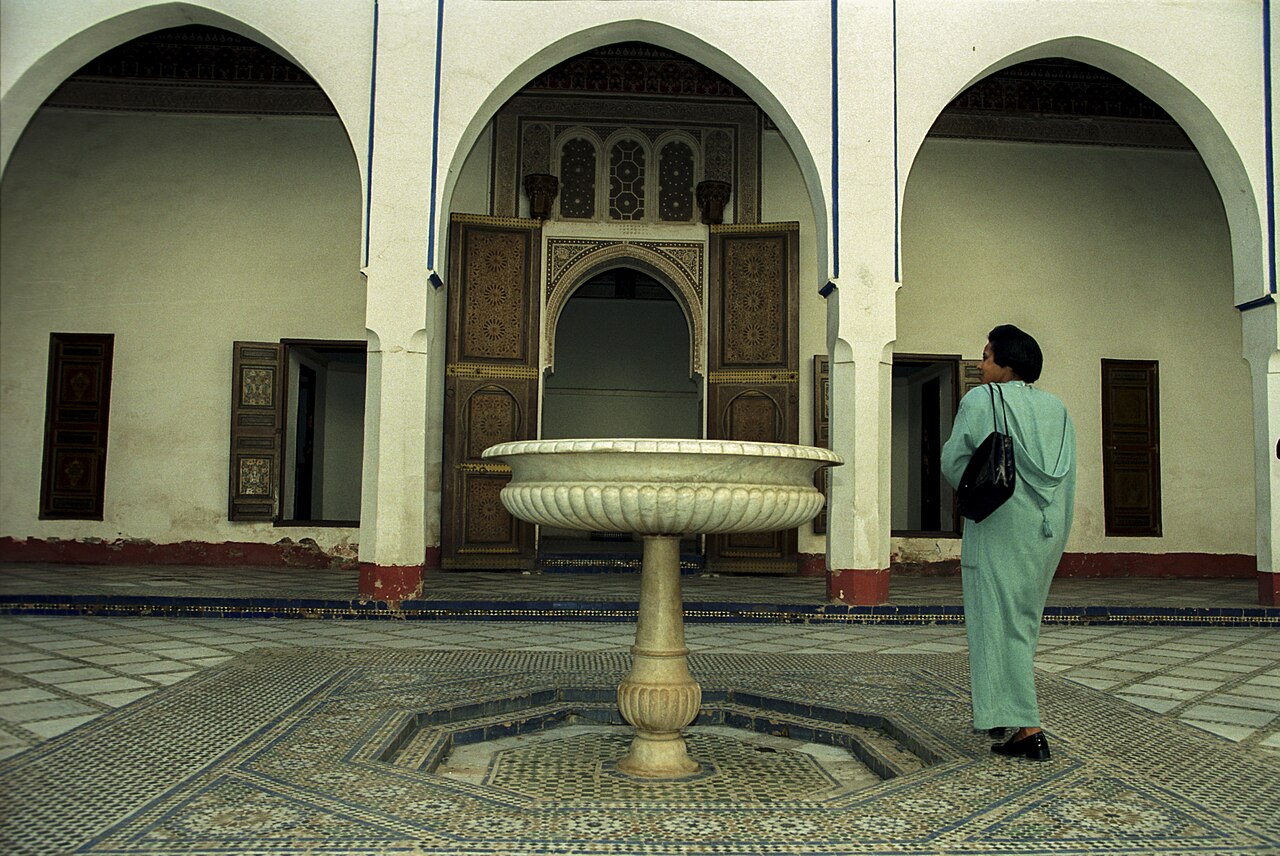
In this separate photograph, the paving pattern, fountain and decorated doorway sit beside broad quieter wall areas. For a current room, compare a patterned object against the wall you retain rather than trying to cover every surface. The picture does not identify a modern coating or establish wet-area suitability.
Six Colors to Compare With What You Keep
- White and chalk
- Keep the existing white if you like it. Compare a clay-colored cushion or blue picture mount against it before repainting. A cool white is not a disqualification, and a chalky appearance does not tell you what coating is on the wall.
- Terracotta and clay
- Try the color in one removable item first: a cushion cover, a vessel or a picture. A clay-colored rug gives a different surface and maintenance commitment from a terracotta floor; neither has to imitate the other.
- Ochre and yellow
- Use an ochre textile beside the wood or upholstery you retain. Compare a clear yellow with a muted sample at the actual size you intend to use. These are decorating choices, not a test of whether a room is Tuscan.
- Cobalt and other blues
- Compare a small patterned tile sample, a print or blue upholstery. Blue can be a large surface or a detail; there is no one-vase quota. Repeat a color from an object you value rather than buying several unrelated coastal symbols.
- Olive and sage
- Try a green fabric, painted finish sample or botanical image beside the existing floor. Living greenery is a separate care decision, not a compulsory way of completing this palette.
- Stone, sand and contrast
- Compare a light stone tone with a darker cabinet or metal frame already in the room. Keep enough contrast to see the details you enjoy. Beige is one option, not the mandatory background for every Mediterranean reference.
These are optional color directions, not a map of Greek, Italian, French or North African households. Test actual samples in daylight and under your usual lights; a screen image cannot specify the paint.
Six Material Decisions Behind the Look
- Olive wood and other timber
- Visible grain can be the detail you choose for a table, bowl or frame. Ask for the actual species, construction and finish rather than inferring them from a golden color. A veneer or useful painted cabinet can stay; solid wood is not a guarantee of durability or suitability for every job.
- Terracotta and other ceramics
- Separate color, clay body, surface treatment and intended use. A terracotta-colored ceramic, an unglazed clay pot and a floor tile are different purchases. For a fitted surface, use the actual product's location, installation and care requirements; irregularity does not prove superior quality.
- Linen, cotton and other textiles
- Compare the fabric you will touch, wash and live with. A loose linen cover, a cotton weave and a blend offer different appearances and care routines. Choose by the selected textile, not a natural-only rule or the assumption that a rougher fabric is more comfortable.
- Iron, brass, copper and other metal
- A bed outline, curtain pole or tray can introduce a repeated metal detail. Keep useful chrome or a polished finish. The color alone does not establish the metal, and an aged appearance is not permission to ignore corrosion or damaged coatings.
- Stone, tile and plaster-look finishes
- A stone sample, glazed wall tile, cut-tile pattern and plaster-effect paint do different jobs. Compare a surface in the location where you plan to use it. Do not infer cooling, slip resistance, waterproofing or floor suitability from a photograph or regional label.
- Wicker, rattan and other woven surfaces
- Use a weave where you want visible texture: a storage basket, seat detail or shade designed for its purpose. Compare structure, support, contents and cleaning. A synthetic alternative is not automatically a poor choice, and a decorative basket is not automatically a planter or food container.
Our Material Guide: texture in interior design separates appearance from construction. You can also compare wabi-sabi references without inventing a shared historical lineage or requiring wear on every object.
Choose Furniture for Four Ordinary Jobs
- Seating
- Choose the seat depth, getting-up height and cover care you use comfortably. Keep the sofa before deciding whether you need another chair or a larger piece. A deep linen sofa is an option, not the starting requirement.
- Tables
- Use the occupied chairs, serving space and routes to decide between round, oval and rectangular. A substantial table can suit a dining area; a smaller one may leave the room more useful. Extra places are not worth blocking a door.
- Beds
- Keep the bed and mattress that work. If you want an iron or wood outline, compare the complete frame, mattress compatibility and access before changing it. An upholstered bed does not prevent the room from using clay, blue or a landscape reference.
- Storage
- Choose closed or open storage by its contents and the cleaning you want to do. Painted cabinets, matching furniture and contemporary shelves can remain. A distressed finish does not establish age or provenance.
Six Mediterranean Living-Room Projects
1. Choose a wall reference before replacing the floor
Try a clay color or plaster-look sample beside the existing floor and sofa. This combines the wall and floor decisions: you may prefer one changed surface with everything else retained. A stone-effect floor can be an intentional choice, not a failed version of a palace. A fitted tile or coating project needs its own product and installation specification.
2. Make the sofa and table work together
Sit, reach for a drink and walk around the table before choosing another piece. Compare a linen cover, a colored cushion or one wood finish with what you keep. A plain, gray or manufactured piece can stay; compare its actual fit and use before replacing it for carved wood.
3. Pair one textile with one metal detail
For example, compare an ochre cushion with a brass-colored lamp base, or blue fabric with the metal already present. Choose the textile's actual care and the object's actual finish. Add cushions only while the seat remains usable; a four- or five-cushion minimum is unnecessary.
4. Keep reading light, then compare evening light
Use the room for reading and conversation under the lights you have. Add a lamp only where it fills a gap. A perforated shade may be a detail you enjoy, but useful ceiling light can remain. Check the complete fitting, compatible bulb and support rather than treating a decorative lantern as an electrical fixture.
5. Use an arch as a shape, not an unsecured object
An arched picture, properly supported mirror or bookcase can echo a form without altering a doorway. Include the whole frame, weight and fixing when comparing it. A large mirror casually leaned against the wall is not a substitute for an appropriate support plan.
6. Edit the ceramic and plant display around its location
Choose a ceramic for the shelf you can support and reach. A plant is optional: match the exact species to available conditions before buying a large olive, citrus or fig for a corner. A botanical picture can supply the subject without the watering and space commitment. Leave room for books, equipment and ordinary use.
For another way to organize collected textiles and pictures, compare the boho living-room projects. For actual illumination tasks, use the living-room lighting guide, not a rule against overhead light.
Six Mediterranean Bedroom Projects
1. Compare the wall finish beside the bed you keep
Try a white, clay or blue sample with the existing headboard. A smooth painted wall can remain; a decorative plaster is a separate surface project. If replacing the bed, assess the complete frame and access rather than choosing solely for an iron or carved-wood appearance.
2. Try the bedding and window covering together
Compare a washable cover and curtain sample in the room. Choose texture, privacy, opening and light control for your use. Heavy linen, floor-pooling fabric and an iron pole are not compulsory, and a useful blind or blend can stay.
3. Plan the bedside surface before adding stone or wood
Put the lamp, book and items you actually use within reach. A wood table and stone-look tray are one possible combination. Check weight, stability and care; a heavy stone top, rough reclaimed chest or floor rug should not obstruct getting out of bed or opening storage.
4. Choose a botanical image or ceramic at the right position
An olive-branch study, citrus photograph or personal landscape can be one small piece, a larger frame or a group. Compare a facing wall and dresser position as well as the bed wall. Include full-frame weight and fixing; large artwork above the bed is not essential. A ceramic display belongs on a supported surface, not wherever a styling list leaves a gap.
5. Keep accessible light without bedside flames
Try the switch from the bed and retain the brightness you need for reading, dressing and cleaning. A warm-looking shade is optional; actual bulb compatibility and clearance matter. Use an appropriate electric or flameless option if you want a candle-like effect, not lit candles beside bedding.
6. Choose plants and a surface reset you can maintain
Leave the dresser and bedside storage useful before adding a pot, bowl or stone collection. If you want herbs, lavender or another plant, identify its needs and decide whether this room can meet them. A fragrance is not a sleep treatment, and a plant is not required to make the room complete.
USFA candle guidance advises against lit candles in bedrooms, bathrooms and sleeping areas. Its electrical guidance covers bulb ratings, cords and combustible items near fixtures. A decorative iron frame or shade does not replace those checks.
Compare organic modern bedroom planning and Moroccan bedroom references as other approaches, not ranks of authenticity or promised sleep quality.
Kitchen, Dining and Bathroom Plans
- Kitchen
- Separate food preparation, storage and display before choosing tile or a wooden board. A glazed decorative jug is not automatically foodware. Keep useful equipment and fit any changed surface to its actual exposure.
- Dining
- Try chairs occupied, serving dishes on the table and normal light before buying a larger set. A blue-and-white vessel, personal picture or woven textile can be the whole decorative change.
- Bathroom
- Choose a dry-wall picture or a small suitable accessory separately from a shower finish. Limewash, Venetian plaster, stone and wood do not become waterproof through a style label. Ask for the complete product, substrate, water-exposure, cleaning and installation requirements before altering a wet area.
The separate twelve-project Mediterranean kitchen guide covers fitted surfaces, storage, food use and a board-versus-display worksheet. For planting, follow the RHS approach of matching the plant's needs to available conditions. An olive, citrus, lavender, herb, bougainvillea or fig reference does not make every such plant suitable indoors. The plant-placement guide can help organize that decision.
Choose a Personal Subject Before a Matching Color
A photograph from a trip, a botanical study or a map of a meaningful place gives the wall a subject beyond a style name. Marrakech is inland, not a Mediterranean coastal city. A map can still matter to you without that claim. Compare the actual place, extent, labels and preview rather than assuming a service covers any city exactly as you imagine.
The Mapiful buyer guide covers editor, format, frame and custom-order questions; we have not tested a print for this room. Include the whole frame or group and its fixing in the plan. Use sofa-wall sizing for the living room and bedroom wall-art options before buying. For a broader comparison, see the coastal room guide; blue, boats and a large poster are not required in either approach.
A Four-Step Color, Material and Use Trial
Suppose you like the blue border and broad pale areas in the palace photograph, but want to keep a gray sofa and existing floor. This is a hypothetical comparison, not a renovation we carried out.
- Write the reference as a visible relationship: one blue patterned area against a quieter background. Do not turn the photograph into an exact paint or material specification.
- Put a blue textile sample and a framed-photo mockup beside the sofa. Compare them in daylight and with the normal reading light before considering a wall finish.
- Choose the job: a washable cushion, a dry-wall picture or a fitted tile panel. Record the selected item's full size, care, support and installation needs; the same color does not make those projects interchangeable.
- Remove the sample and compare again. Keep the existing room, try one object or develop one specified surface project. A full palette replacement is not the required outcome.
Six Checks Before Buying
- Keep useful floors and furniture before buying a coordinated replacement scheme.
- Choose the amount of pattern and color you enjoy; mixing references is allowed.
- Distinguish the color you want from a material and from a complete fitted system.
- Use the actual care, support and intended-use information, not a handmade-look promise.
- Leave task light, privacy, storage and movement working after the decorative change.
- Treat a photograph as a reference, not a paint match, product test or installation drawing.
For a more specific craft reference, the Moroccan materials guide distinguishes named tilework and surface systems. Sources and article checked November 16, 2026.